Author: Veronica Charalambous

ACT4DYS ePortfolio Successfully Piloted Across Five European Countries

The ACT4DYS ePortfolio was successfully piloted among youth workers, young people, and young persons with disabilities in Belgium, Cyprus, Ireland, Spain, and Portugal.

The piloting phase aimed to test, review, and validate the ACT4DYS ePortfolio ahead of its final launch, ensuring that its content, accessibility, usability, and relevance meet the needs of its target groups and align with the project’s objectives on disability-inclusive and sustainable urban development.

More specifically, the pilot sought to evaluate the quality of the ePortfolio’s content, its accessibility features, and overall user-friendliness, assessing its effectiveness in promoting inclusive and sustainable city practices. It also aimed to validate the innovative and replicable nature of the featured case studies across diverse contexts, while gathering structured feedback from different target groups to inform further improvements.

The initial goal was to engage 125 participants in the piloting process. This target was exceeded, with a total of 132 participants taking part: 55 youth workers, 43 young people, and 34 persons with disabilities.

Overall, the ePortfolio was very well received. Participants expressed high levels of satisfaction and provided positive feedback on its content and approach. At the same time, valuable suggestions were shared, particularly regarding further enhancements to accessibility. The ACT4DYS consortium will integrate as many of these improvements as possible prior to the official launch of the ePortfolio, reinforcing its commitment to inclusivity and user-centred design.

Learn more about the project: https://act4dys.eu/

AGRITECH Consortium Meets in Hungary for Transnational Project Meeting

The AGRITECH consortium recently met in Hungary for a Transnational Project Meeting, bringing together partners from across Europe to review progress and coordinate the next steps of the project. AGRITECH aims to transform agricultural education by integrating advanced technologies, innovative learning approaches, and modern management practices, responding to the evolving needs of the agricultural sector.

The meeting was organised to ensure effective coordination among partners, review ongoing work, and plan upcoming activities. Through open discussion and joint planning, partners aligned their efforts and reinforced collaboration across countries, sectors, and disciplines involved in the project.

During the meeting, partners reviewed progress across the different work packages and discussed the status of key deliverables. Particular attention was given to the development of the AgriTech Manager competence profile and the design of the learning ecosystem that will support future training and certification. The consortium also discussed the next phases of the project, including preparations for pilot activities, further development of the AGRITECH platform, training implementation, and upcoming policy-related outputs.

The face-to-face format of the meeting played an important role in strengthening shared understanding and ensuring quality and coherence across project activities. It also provided valuable opportunities for knowledge exchange between partners from education, research, and the agricultural sector, supporting a common vision for the project’s outcomes.

Looking ahead, the consortium will continue working closely on the implementation of planned activities and the delivery of upcoming milestones. Partners remain committed to coordinated action and regular communication to ensure the successful implementation of the project across all participating countries.

Learn more about the project: https://agritech-project.eu/ 

Empowering Youth Voices Across Europe: Highlights from GET POLITICAL Newsletter #2

The GET POLITICAL project continues to strengthen political literacy across Europe through research, exchange, and practical tools for youth engagement. Recent activities include the development of National and Transnational Political Posters, a comparative overview of political realities across partner countries, and the launch of the Booklet of Political Literacy Practices, a hands-on resource for youth workers and educators tested through national pilot sessions.

A key highlight of this period was the three-day Exchange of Political Literacy Practices in Kalamaria, Greece, bringing together partners, young people, and local authorities to explore Youth Councils and participatory strategies at municipal level. 

Learn more about the project, here: https://getpolitical-project.eu/ 

Discover the full story, insights, and what’s coming next in Newsletter #2, read the complete edition on our website.

MineTOUR Project Concludes with Innovative Digital Tools Empowering Rural Youth

The MineTOUR project has reached a major milestone with the successful completion of its core activities, marking significant progress in supporting young people and rural communities through digital innovation in tourism promotion. 

Central to the project’s achievements is the finalization of the MineTOUR Minecraft game, an interactive educational tool designed to engage young people in exploring and promoting rural tourism. The game was introduced and tested during multiple Info Days and validation sessions across partner countries, providing opportunities for youth and local stakeholders to shape its final development through hands-on feedback. 

Another key outcome is the launch of the Interactive Digital Map, an online platform enabling users to highlight points of interest in their regions, from cultural sites and local shops to natural landscapes and walking trails. Contributions from all partner countries have resulted in a diverse and vibrant digital guide showcasing the richness of rural destinations. 

As part of its efforts to strengthen digital skills among young people, the project also delivered TikTok training sessions, equipping participants with the ability to create compelling short-form videos to promote their hometowns. This training supported youth in becoming active ambassadors, sharing local stories and increasing visibility for rural tourism through creative digital storytelling. 

The project concluded with a final series of Info Days presenting the latest results and tools to young people, rural communities, and youth-work professionals. Participants were encouraged to continue using the MineTOUR resources to foster sustainable tourism and support local development beyond the project’s official end. 

The consortium expressed its appreciation to all partners, educators, youth participants, and community members whose contributions were vital to the project’s success. 

Learn more by visiting the project’s website: https://minetour.eu/ 

The European AELIA Project Launches a New Crowdsourcing Platform for Sustainability Initiatives

The European project AELIA, implemented in Cyprus by CARDET, the Cyprus Pedagogical Institute, and the Unit for Education for the Environment and Sustainable Development (EESD) of the Ministry of Education, has launched a new online crowdsourcing platform aimed at strengthening citizen participation and facilitating the exchange of ideas and collaboration on sustainability initiatives.

The platform is open to educators, citizens, local authorities, and community groups who wish to take practical action towards creating more sustainable schools, neighbourhoods, and communities. Through a user-friendly and interactive environment, users can create new sustainability initiatives, support existing actions, and communicate in real time through comments and discussions.

The platform encourages collaboration and networking by providing a space for the exchange of ideas and the collective implementation of projects related to environmental, social, and educational sustainability. It is available in four languages (English, Greek, Serbian, and Romanian) and remains open to users from around the world, who can create new initiatives or support those already in place.

In parallel, within the framework of the AELIA project, a series of online seminars (webinars) were delivered, offering guidance, practical advice, and examples of good practice for the design and implementation of sustainability actions at local and school level.

The crowdsourcing platform forms an integral part of AELIA’s broader efforts in Education for Sustainable Development. By promoting the exchange of knowledge, good practices, and innovative ideas, it supports the development of sustainable solutions that respond to the real needs of local communities. Through collaboration and active participation, AELIA contributes to empowering communities across Europe, promoting environmental protection, social responsibility, and sustainable education.

Learn more about the AELIA project: https://www.aelia-project.eu 

CARDET Participates in Final RALExILA Conference and TPM in Brussels: Building the Backbone of Lifelong Learning

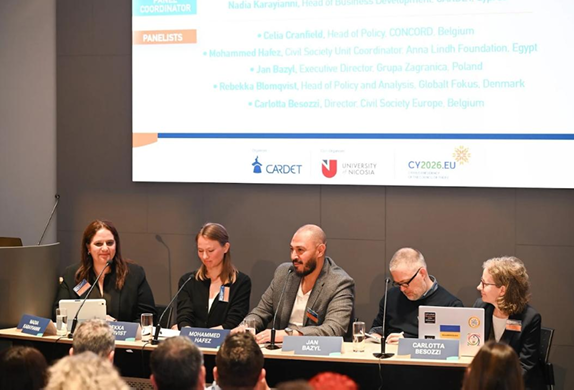
CARDET contributed to the concluding activities of the RALExILA project in Brussels on 3-4 December, participating in the Final Conference on Adult Learning and Education (ALE) Registries and Individual Learning Accounts (ILAs) as well as the project’s Final Transnational Project Meeting.

Hosted at the Pullman Brussels Centre Midi and organised by the European Association for the Education of Adults (EAEA), the Final Conference brought together representatives from European institutions, national authorities, social partners, employers, and adult learning stakeholders. The event explored the emerging landscape of digital infrastructures that underpin ILAs, emphasising the governance models and national registries required to support learner autonomy and skills development across Europe.

During the discussions, CARDET highlighted the importance of building transparent, interoperable national registries that can serve as trusted reference points for learners, providers, and policymakers. The organisation participated alongside key Cypriot stakeholders, including the Human Resource Development Authority of Cyprus (HRDA) and the Cyprus Employers & Industrialists Federation (OEB). Their presence underscored the necessity of coordinated action among public authorities, employers, and training providers for establishing resilient lifelong learning ecosystems.

Expert contributions, including interventions from OECD, the European Commission, and consortium partners, addressed critical dimensions of the emerging systems for adult learning:

  • Interoperability and common standards, such as the European Learning Model, which are essential for ensuring the portability and recognition of skills across borders.
  • Quality assurance mechanisms, reinforcing that the value of national registries relies on the accuracy, reliability, and transparency of the information they contain.
  • Learner guidance and support, which remain indispensable for enabling adults to navigate opportunities within ILAs and broader adult learning frameworks.

The conference also provided a platform for EU-level dialogue on good practices, interactive workshops, and the presentation of initiatives that support future ALE policy and implementation. The following day, on 4 December, project partners convened for the Final TPM to review the project’s outcomes, sustainability pathways, and recommendations for advancing ILAs across Europe.

For further information on the RALExILA project and its outputs, please visit the project website at https://ralexila.eu/

Exploring Rural Creativity: MINEtour Reaches Key Milestones – Newsletter #4

The MINEtour project is nearing completion with several key milestones that strengthen rural youth participation in local tourism and cultural heritage promotion. Over recent months, the consortium successfully finalised and validated the MineTOUR Minecraft game, launched the Interactive Digital Map featuring local businesses, cultural sites, and nature trails, and delivered TikTok training sessions that equipped young people with creative digital storytelling skills. These achievements provide youth with practical tools to showcase their hometowns and actively engage in sustainable tourism initiatives.

As the project concludes, partners express sincere appreciation to all young participants and community stakeholders who contributed to its progress. The final round of Info Days marked another important milestone, offering an opportunity to present the latest tools, results, and resources to rural communities and youth-work professionals. 

To explore the full story and access the project’s outputs, we invite you to download the latest MINETOUR 4 newsletter.

Download the Newsletter #4

Civic Champions: Cyprus Feedback Helps Shape New Indicators for Monitoring Civic Space Across the Region

A new set of indicators has been developed to monitor the environment in which civil society organisations operate across Bulgaria, Cyprus, Greece, and Italy. Drawing on the challenges highlighted within the Comparative Report and the Civic Champions Brochure, the indicators aim to capture the state of fundamental freedoms, the pressures faced by civil society, ongoing developments, and emerging threats. Particular attention is given to the experiences of individuals and groups targeted with physical, verbal, or digital attacks, including LGBTQ+ communities, migrants, and other marginalised groups.

Recent consultations in Cyprus, developed by CARDET, further informed the process, offering practical insights into how civil society data can be collected and presented more effectively. Participants stressed the need for clearer identification processes to ensure the credibility of survey responses and avoid distortions, noting that more detailed organisational information, such as official registration numbers, would strengthen the reliability of the dataset. They also highlighted the value of transparent participation figures, recommending that the total number of responding organisations be displayed once a minimum threshold is reached.

Suggestions emphasised user-friendly access to results, including the possibility for public institutions to view data without log-in requirements and the addition of filtering tools to explore specific issues, compare different groups, and assess the scale of incidents. Participants also recommended including an “Other” option in certain sections to allow for context-specific information not fully captured by the thematic categories.

To support longitudinal analysis, the briefings underscored the importance of incorporating previous years’ data. This would allow for year-to-year comparisons and the inclusion of questions focused on whether conditions had improved or deteriorated. It was also suggested that respondents be informed of the estimated completion time at the start of the questionnaire, improving clarity and user experience.

These contributions will help refine the emerging indicators, ensuring that they reflect real-world conditions while supporting evidence-based policymaking, stronger advocacy, and a more resilient civic space across the region.

Learn more about the Civic Champions Project here: https://cardet.org/civic-champions/ 

Empowering Social Change: Launch of the EPIC Toolkits for Youth and Youth Workers

A new set of specialized resources, the EPIC Toolkits, has been officiallyreleased to support the development of social entrepreneurship across the Western Balkans. These toolkits provide a practical roadmap for young innovators and educators to transform social challenges into sustainable entrepreneurial ventures.

A comprehensive approach to social innovation
The toolkits were developed to provide hands-on application of the EPIC Curriculum, utilizing non-formal learning methodologies to foster a social innovation mindset. The resources are tailored into two distinct editions:

  • Toolkit for youth: Focuses on developing core competencies such as leadership, ethical thinking, and opportunity identification. It guides young people through the practical steps of creating a Social Business Model Canvas and performing SWOT analyses to solve community issues.
  • Toolkit for youth workers: Equips youth workers with advanced mentoring and counseling strategies. It emphasizes the importance of emotional intelligence and social justice, helping youth workers provide structured support for young entrepreneurs.

Impact
The effectiveness of these tools was validated during pilot implementations, where they received high praise for their clarity and utility:

  • Kosovo: 100% of youth participants found the content very clear and easy to understand. The training successfully engaged a diverse cohort, with 83% of applicants being women.
  • Albania: The curriculum and tools allowed participants to engage with real-world social enterprises, such as New York Tirana Bagels. Consequently, 85.7% of youth worker participants expressed the highest level of satisfaction.
  • Bosnia and Herzegovina: The toolkits provided the first structured exposure to social entrepreneurship for many, helping them move beyond the traditional “humanitarian” view toward a value-driven business approach.

Sustainable skills for the future
Even in regions lacking a formal legal framework for social enterprises, the EPIC Toolkits empower participants to operate effectively by focusing on the European EntreComp framework. By bridging the gap between social work and entrepreneurial action, these resources ensure that the next generation is ready to lead sustainable community-focused innovation.

More information about the project is available at: https://epic-project.eu/