


“The Empty Chair”: Reclaiming Democratic Space for Cypriot Youth

When Cyprus assumed the Presidency of the Council of the European Union in 2026 under the motto “An Autonomous Union. Open to the World”, it projected resilience outward. Yet at home, one chair in its democracy remains conspicuously empty: the one reserved for its youth. Taking office during a time of severe geopolitical upheaval, this presidency seeks to turn these difficulties into chances for social cohesion and resilience (Secretariat of the Cyprus Presidency, 2025). Beneath the high-level summits, though, there is still a significant domestic issue: the growing distance between young Cypriots and the official democratic processes.
Cyprus presents a democratic paradox: young people vote, volunteer and mobilise, yet they rarely govern. The country recorded one of the lowest numbers of youth active in societal change initiatives at 31%, significantly trailing the EU average of 48% (‘Youth and Democracy’ survey showed; Kountouris, 2011). This lack of trust in political institutions is reflected in political representation; despite making up a significant portion of the workforce, only 9% of the national parliament is under the age of 35 (YouthWiki, 2025a). While the results of the 4th Youth Barometer, show 61% of young people aged 18-35 report they ‘usually tend to vote,’ official data shows that in recent elections, young people were rarely found as political representatives, with no reserved seat quotas or existing provisions to facilitate their candidacy (YouthWiki, 2025a).
Labeling this trend as ‘youth apathy’ obscures a deeper institutional failure: participation structures have not evolved at the pace of economic and social pressures facing young citizens. As of late 2025, youth unemployment in Cyprus stood at 13.1%, which, while improving, remains a central concern for graduates entering the market (YCharts, 2025). Furthermore, skyrocketing costs mean young people increasingly struggle to leave the parental home, despite state housing aid approaching €80 million. These everyday pressures, including energy costs and protection in the digital environment, create a ‘locked out’ generation where the ‘empty chair’ at the policy table is often a result of being too exhausted by survival to participate in governance.
If disengagement is structural, then symbolic inclusion will not suffice. Structural reform must follow. The 2026 Presidency offers a chance to advocate for systemic changes in addition to being a logistical exercise. An important initiative in this landscape is the EU Presidency Project 5 (EUPP5), funded by the European Commission and coordinated in Cyprus by CARDET. Through EUPP5, civil society is already laying the groundwork for a more inclusive future by facilitating dialogue between policymakers and citizens on themes like civic space and the just transition (CARDET, 2026). To move from despising politics to shaping policy, we must focus on three transformative pillars.
First, we must modernise the gateway to democracy. The 2025 constitutional amendment to lower the voting age to 17—along with automatic voter registration—is a significant step, though it will not take effect until July 2027 (YouthWiki, 2025a). In order to create lifelong engagement habits, we must use the 2026 Presidency as a ‘bridge year’ to engage the newly eligible voters through extensive civic education campaigns.
Second, there must be a formal recognition of non-formal learning. In order to bridge the gap between formal resumes and social engagement, grassroots activism and involvement in youth projects funded by the EU should be considered “civic credits”. Programmes such as Erasmus+ and the European Solidarity Corps already function as laboratories of democratic practice. Young people develop negotiation skills, media literacy and policy awareness through transnational engagement. Yet these experiences rarely translate into formal political pathways at home. Recognising non-formal civic participation as institutional capital would bridge that gap. The Foundation for the Management of European Lifelong Learning Programmes (IDEP) in Cyprus will play a key role in highlighting these pathways as lifelines for democratic engagement.
Cyprus could institutionalise intergenerational accountability by introducing a mandatory ‘Youth Impact Assessment’ for all Presidency-linked policy proposals, ensuring measurable evaluation of long-term effects on citizens under 35. This converts young people from passive recipients of policy into active participants in the European landscape by ensuring that every piece of legislation, from digital rights to green transitions, is evaluated for its long-term effects on the next generation.
The motto of an Autonomous Union must apply to our youth as well; we cannot claim to be an open or an autonomous Union if our youngest citizens feel locked out of the room. The empty chair is not evidence of youth indifference; it is evidence of institutional design failure. If Cyprus truly seeks resilience and cohesion, widening the pathways to democratic power must become part of its Presidency legacy, not a side conversation to it.
The project “Towards an open, fair and sustainable Europe in the world – EU Presidency Project 2024-2026” is co-funded by the European Union and implemented by Global Focus, Grupa Zagranica, CARDET, and CONCORD, the European Confederation of NGOs working on sustainable development and international cooperation. Project Number: 2024 / 459-484. The contents of this publication are the sole responsibility of CARDET and do not necessarily reflect the views of the European Union.
Katerina Panayi,
CARDET Researcher and Project Manager
Τhis opinion piece was published on Policypress.
References
- Cyprus Youth Council (CYC). (2026). Mental Health and Inclusivity Conference – Presidency Highlights. https://cyc.org.cy/2026/01/30/high-level-conference-of-the-cypriot-presidency-of-the-council-of-the-european-union-entitled-mental-health-and-inclusivity/
- Kountouris, V. (2011, March 15). Information sheet ‘Participation of young people’ Cyprus. Council of Europe.
- Youth Board of Cyprus (ONEK). (2024). National Strategy for Youth 2024-2030. https://youthpolicy.onek.org.cy/en/youth-work/introduction/
- YCharts. (2025). Cyprus Youth Unemployment Rate Statistics. https://ycharts.com/indicators/cyprus_youth_unemployment_rate_unadjusted
- YouthWiki Cyprus. (2025a). Youth participation in representative democracy. https://national-policies.eacea.ec.europa.eu/youthwiki/chapters/cyprus/52-youth-participation-in-representative-democracy
- YouthWiki. (2025b, March 28). 5. Participation – Cyprus. National Policies Platform. https://national-policies.eacea.ec.europa.eu/youthwiki/chapters/cyprus/5-participation

LATEST NEWS
 14/10/26
CONCORD AidWatch 2026: EU Development Aid Plummets Amid Widespread Cuts as Global Solidarity Risks Backslide
Official Development Assistance (ODA) from European Union Member States and EU Institutions declined sharply in 2025, dropping by 11.4% in real terms compared to 2024,...
Read more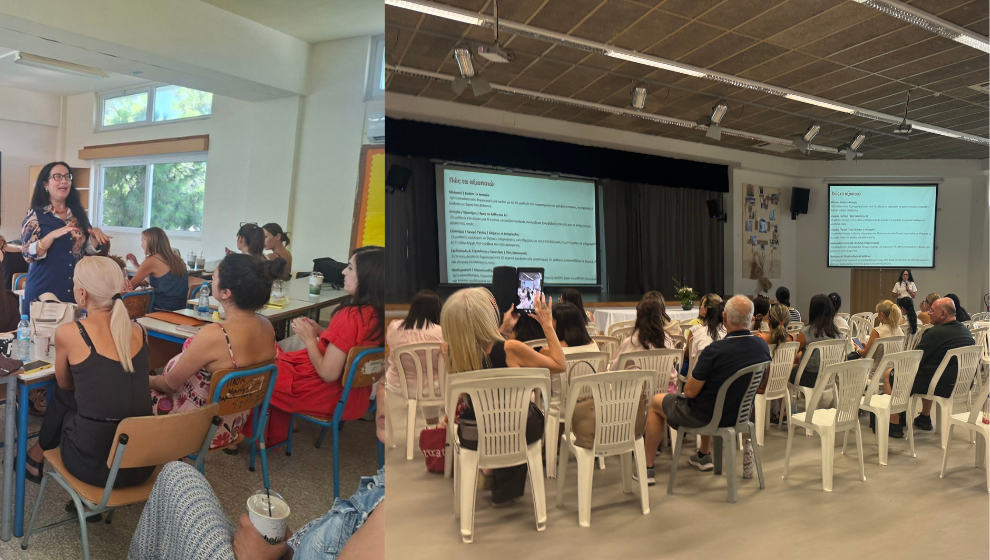 11/09/26
Professional Development Seminars for Teachers Held During the 2026 Teachers’ Two-Day Event
Seven professional development seminars for teachers were successfully delivered as part of the annual Teachers’ Two-Day Event, held from 8 to 10 September 2026 across...
Read more 03/08/26
Young People Shape the Future of Mental Health Support in Cyprus
Young people in Cyprus are helping drive meaningful change in how mental health is understood, prioritised, and supported nationwide. After 26 months of coordinated action,...
Read more