Month: June 2026

Migration as a Fundamental Human Right

In light of the recent racist and Islamophobic demonstrations in the United Kingdom, as well as the solidarity counter-protests organized by anti-racist initiatives such as Stand Up To Racism under slogans such as “Refugees Welcome,” it has become evident that the war against migration is intensifying. The rise of far-right political forces in many countries is fueling a public discourse that portrays migration as a threat and migrants as a problem to be managed.

Within this climate, a dangerous distinction is being constructed between “good” and “bad” migration. The “good” migrant is often portrayed as white, European, and culturally familiar. In contrast, the “bad” migrant is associated with people from Africa, the Middle East, or other regions of the Global South. As a result, acceptance of migration is no longer based on recognition of shared human dignity, but rather on criteria such as race, origin, and economic utility.

The Western world has assumed the role of determining what constitutes “proper” or “legal” migration, imposing strict conditions on who is entitled to move and under what circumstances. In her book “The Ungrateful Refugee”, Dina Nayeri describes how refugees are constantly required to prove that they deserve protection, that the reasons for their displacement are sufficiently compelling, and that they are grateful to the countries that receive them. Rather than being treated as individuals with fundamental rights, they are often reduced to petitioners seeking recognition of their very existence.

The reasons that compel a person to leave their home, family, and homeland require little explanation. Whether driven by war, political persecution, extreme poverty, environmental disasters, or a lack of prospects, migration is almost always a difficult and painful decision. Yet a person’s need to seek safety, dignity, and better living conditions should not require constant justification, particularly before states and international structures that have often contributed, historically or economically, to creating the very conditions from which these individuals are trying to escape.

In his work “Illegal Immigration as Resistance to Global Poverty”, Gwilym David Blunt argues that irregular migration can be understood as a form of resistance to a global system that produces and perpetuates inequality and poverty. According to this perspective, migration is not merely an act of survival but also a claim to self-determination. Blunt further emphasizes that wealthy states have a responsibility not to support or benefit from international institutions that contribute to systematic human rights violations.

The distinction between “legal” and “irregular” migrants is often conflated with a moral distinction between “good” and “bad” people. However, the fact that someone was unable to follow official migration procedures does not mean that their reasons for migrating are any less legitimate. In most cases, those who move without the necessary documentation would choose a safe and legal route if one were genuinely available. Marginalizing people because they lacked the means or opportunities to migrate legally is a deeply hypocritical stance in a world where millions of people have been, are, or will become migrants at some point in their lives.

Migration has been a defining feature of human history throughout the ages. Societies, cities, cultures, civilizations, and everyday lives have been shaped through population movements, exchanges of ideas, and interactions between diverse communities. Multiculturalism does not weaken societies. It enriches them. Fears about the “erosion” of culture or threats to national identity are often rooted more in political narratives than in empirical reality. Even when social challenges emerge, the protection of an abstract notion of national purity cannot outweigh the fundamental rights of people seeking safety, freedom, and a dignified life.

Recognizing migration as a fundamental human freedom does not imply the abolition of borders or the absence of migration management policies. It does, however, require that every discussion about migration begin with a basic principle: no human being is illegal, and human dignity does not depend on the passport one holds or the country in which one was born.

The project “Towards an open, fair and sustainable Europe in the world – EU Presidency Project 2024-2026” is co-funded by the European Union and implemented by Global Focus, Grupa Zagranica, CARDET, and CONCORD, the European Confederation of NGOs working on sustainable development and international cooperation. Project Number: 2024 / 459-484. The contents of this publication are the sole responsibility of CARDET and do not necessarily reflect the views of the European Union.

Foteini Sokratous,
Project Manager, CARDET

The article was published at the PolicyPress.

TINKER Supports Excellence in Inclusive Informatics Education through the Scientix Authentic and Inclusive Informatics Award

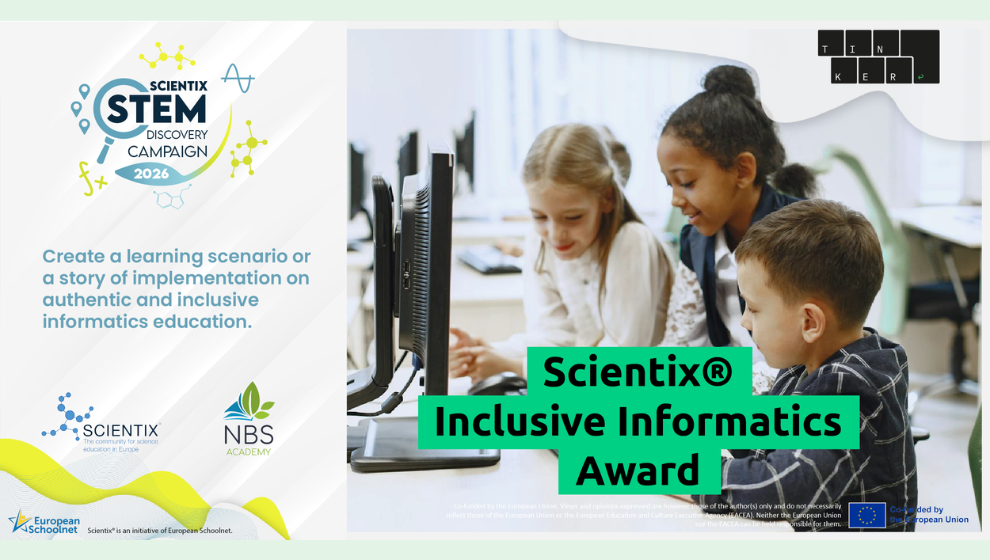
The TINKER project proudly supported the Scientix Authentic and Inclusive Informatics Award, presented as part of the 2026 STEM Discovery Campaign, recognising educators who promote authentic, inclusive and engaging approaches to informatics education.

The annual Scientix STEM Discovery Campaign, co-organised this year with the support of the NBS Academy project, ran from 1 February to 30 April 2026. The initiative brought together educators, schools, universities, libraries, organisations and youth clubs from more than 50 countries, resulting in over 9,000 STEM education activities that reached more than 200,000 teachers and 800,000 students.

As part of the Scientix Awards initiative, TINKER supported the Authentic and Inclusive Informatics Award, inviting educators to showcase learning scenarios and classroom practices inspired by authentic learning, gender-inclusive teaching, the TINKER Toolkit and the TINKER MOOC. More than 140 submissions were received, with 83 entries shortlisted for the award.

The 2026 award winners are:

  • Stavroula Lada (Greece) for Crafting a Smart Garden Watering Helper, an innovative learning scenario demonstrating authentic informatics learning through real-world problem solving.
  • Eda Aygün (Türkiye) for Digital Balance: Algorithms and Statistics, a learning scenario combining computational thinking with statistical concepts in an inclusive learning environment.

Both winners have been invited to participate in the upcoming Science Projects Workshop at the European Schoolnet office in Brussels, where they will exchange ideas, collaborate with fellow educators, and explore innovative STEM teaching practices through networking and peer learning activities.

Alongside its contribution to the Scientix Awards initiative, TINKER has also strengthened teachers’ capacity through its international online course, Teach Informatics Using Authentic Learning and Gender Inclusion. Running until 29 April 2026, the MOOC brought together more than 1,200 participants from 67 countries across Europe and beyond to explore gender-inclusive and authentic approaches to teaching informatics.

Designed for pre-service and in-service informatics and STEM teachers, non-formal educators and educational technology professionals, the four-module course combined practical activities, interactive learning materials and two live online events. Participants explored the TINKER framework and toolkit, discovered practical gender-inclusive teaching strategies, and designed and assessed authentic informatics learning scenarios for classroom implementation.

The course outcomes highlighted the value of the learning experience. Participants reported greater confidence in applying gender-inclusive and authentic learning approaches in informatics education, as well as a stronger ability to reflect on and further develop their own teaching practice. Many also expressed their intention to integrate the course’s ideas, strategies and examples into their everyday teaching to create more inclusive and engaging learning experiences. As one participant noted:

“What I enjoyed most about this course was its strong connection between informatics, authentic learning and inclusion. I especially appreciated how the course encouraged us to think about coding and digital skills as tools for solving meaningful real-world problems”.

Although the live edition of the MOOC has concluded, the course remains accessible through the European Schoolnet Academy platform. 

Check out the course content: Teach informatics using authentic learning and gender inclusion | European Schoolnet Academy, and get inspired to create more inclusive and authentic learning experiences!ntic learning and gender-inclusive pedagogies, helping address persistent gender imbalances in computer science education.

For more information visit the project’s website.

How Europeans Consume Political Information in the Digital Age

Europe’s public sphere is undergoing a profound transformation. The way citizens consume political and social information is no longer defined primarily by newspapers or evening television bulletins, but increasingly by algorithms, scrolling habits, and the dynamics of digital platforms. The findings of the 2025 Flash Eurobarometer on social media usage reveal more than changing media preferences; they expose a fundamental shift in how democracy itself is experienced across Europe.

Traditional media still matters. Television, in particular, continues to hold a central place in the information habits of Europeans, with 71% of respondents identifying it as a key source of political and social news. Yet digital platforms are rapidly reshaping the landscape, especially among younger generations. Among Europeans aged 15 to 24, 65% now cite social media as their primary source of political and social information, overtaking television entirely.

This is not simply a technological evolution, but a democratic one. Younger citizens are forming opinions, engaging with public affairs, and interpreting world events through platforms designed for speed, personalization, and emotional engagement. Politics increasingly appears in the same digital space as entertainment, influencer culture, and lifestyle content, fundamentally altering how public discourse is consumed.

The shift carries undeniable opportunities. Social media has democratized access to information and broadened participation in debate. Citizens can now interact directly with politicians, journalists, activists, and independent creators without relying solely on traditional media gatekeepers. Voices that once struggled for visibility can now reach millions.

At the same time, however, the risks are impossible to ignore. The survey found that 66% of Europeans believe they encountered fake or misleading information online within just one week prior to the study. Even more concerning is that much of the political content users consume online is encountered passively while browsing for unrelated material. This means that algorithms increasingly shape exposure to political narratives, often prioritizing emotional impact and engagement over accuracy or context.
Perhaps the most striking development is the growing influence of content creators and influencers in shaping public opinion. More than a third of Europeans now follow influencers on social media, while among young people aged 15 to 24 the figure rises dramatically to 74%. In many cases, these creators are no longer confined to lifestyle or entertainment commentary; they are increasingly discussing political and social issues, becoming influential actors within the public sphere despite operating outside traditional journalistic standards or institutional accountability.

This reflects a broader crisis of trust in conventional authority structures. For younger audiences, influencers often appear more authentic, relatable, and accessible than political institutions or mainstream media organisations. The challenge is that visibility and virality are not substitutes for expertise or factual accuracy.

The question facing Europe, therefore, is not whether digital platforms should play a role in democratic life; they already do. The real challenge is whether democratic values can survive within an information ecosystem driven primarily by attention economics. Media literacy is no longer optional. The ability to critically assess sources, identify manipulation, and distinguish fact from opinion has become essential to democratic participation.

Europe cannot afford to approach this transformation with either panic or complacency. Social media is neither the saviour nor the destroyer of democracy. It is a powerful tool that amplifies both informed engagement and disinformation, civic participation and polarization. The responsibility now lies with policymakers, educators, media institutions, and platforms themselves to ensure that the digital public sphere strengthens rather than weakens democratic resilience.

The future of European democracy may increasingly be decided not only in parliaments and polling stations, but in algorithms, recommendation feeds, and the endless scroll of online content competing for citizens’ attention every single day.

The project “Towards an open, fair and sustainable Europe in the world – EU Presidency Project 2024-2026” is co-funded by the European Union and implemented by Global Focus, Grupa Zagranica, CARDET, and CONCORD, the European Confederation of NGOs working on sustainable development and international cooperation. Project Number: 2024 / 459-484. The contents of this publication are the sole responsibility of CARDET and do not necessarily reflect the views of the European Union.

References

European Parliament, Directorate-General for Communication (2025). Flash Eurobarometer 3592: Social Media Survey 2025. Conducted by Ipsos European Public Affairs. Dataset: GESIS, Cologne. https://doi.org/10.4232/1.14703. Available at: https://europa.eu/eurobarometer/surveys/detail/3592

Αcknowledgement of contribution: Veronica Charalambous, Senior Communications Officer, CARDET

Dr Marinos Papaioakeim,
Head of Program Implementation, CARDET

The article was published at the PolicyPress.

The Next European Budget as a Test for Democracy and Civil Society

The European Union is currently at a critical stage in shaping its next Multiannual Financial Framework (MFF) for the period 2028-2034. As the EU’s long-term budget, the MFF will determine how European resources are allocated over the next seven years, influencing investments in social cohesion, competitiveness, the green and digital transitions, education, democracy, human rights, external action, and support for citizens.

For civil society, this discussion is neither technical nor distant. It is deeply political and directly connected to the kind of Europe we want to build in the years ahead. The European budget does not simply reflect financial priorities. It reflects values. It demonstrates what Europe chooses to protect, strengthen, and maintain at the heart of its political action.

Over recent years, civil society organisations at both European and local levels have played a vital role in supporting vulnerable groups, defending human rights, strengthening social cohesion, promoting sustainable development, and keeping democratic dialogue alive. At the same time, they operate in an increasingly challenging environment characterised by limited resources, growing administrative burdens, shrinking civic space, successive crises, and the need to respond rapidly to emerging social challenges.

This is why the debate surrounding the MFF 2028-2034 has mobilised a broad range of organisations and European networks. Networks such as CONCORD Europe, Civil Society Europe, SOLIDAR, and many other European platforms have made it clear that support for civil society cannot be treated as a supplementary or secondary issue. Rather, it must be recognised as a prerequisite for a resilient, democratic, and socially just Europe.

In Cyprus, this discussion has also been advanced through the EUPP5 programme, “Towards an Open, Fair and Sustainable Europe in the World”, with CARDET coordinating awareness-raising, dialogue, and advocacy activities at both national and European levels. Cypriot civil society has contributed to a broader European effort to ensure that the voices of organisations are heard before key decisions are finalised. These discussions have focused on funding mechanisms, access to EU programmes for NGOs, the protection of human rights, and the need for organisations to participate in the design of policies that affect them.

These collective efforts have already yielded results. The proposed AgoraEU programme, which aims to bring together and strengthen the fields of culture, media, and civil society, represents an important development. The provision of increased funding for values, democracy, equality, rights, and citizen participation demonstrates that sustained advocacy by civil society at the European level has had a tangible impact. The discussion surrounding CERV+, within the framework of AgoraEU, acknowledges that organisations working on rights, democratic participation, and equality require stronger, more accessible, and more predictable funding mechanisms.

At the same time, the adoption of the new EU Civil Society Strategy marks another positive step forward. The creation of a new dialogue platform for civil society, the development of tools to monitor and protect civic space, and the recognition of the need for sustainable funding contribute to a clearer political framework. For the first time, support for civil society is being more explicitly linked to the resilience of democracy across Europe.

Despite these positive developments, the work is far from complete. Experience has shown that strategic recognition alone is not enough unless it is accompanied by clear implementation mechanisms, adequate resources, and meaningful participation by organisations in decision-making processes. The critical question is no longer whether the EU recognises the role of civil society. The real question is who will implement this strategy, how it will be implemented, according to what timeline, through which indicators, and with what accountability mechanisms.

Similarly, several important issues within the MFF negotiations remain unresolved. The final allocation of funding across different categories of European programmes has yet to be determined. Negotiations within the Council and with the European Parliament are ongoing, while funding arrangements and broader horizontal issues remain subject to political negotiation. This means that civil society organisations must continue to closely monitor developments, contribute evidence-based recommendations, and cooperate at both European and national levels.

For Cyprus in particular, the discussion has an additional dimension. The priorities established within national and regional plans, especially regarding structural funds and social cohesion investments, will largely determine whether the needs of civil society are meaningfully integrated or remain marginalised. NGOs in Cyprus require access to more flexible funding, support for organisational development, opportunities to participate in policy design, enhanced transparency, and recognition of their role as partners of the state rather than merely implementers of individual projects.

Civil society should not be called upon only during times of crisis. Nor should it be recognised only when it reaches communities and individuals beyond the scope of public services. It must have a place in policy design, consultation, monitoring, and evaluation processes that directly affect citizens.

The coming period will be crucial. Discussions on the MFF will continue at both technical and political levels, while the decisions taken will directly shape the operational capacity of civil society organisations from 2028 onwards. The mobilisation seen so far has demonstrated that when organisations collaborate, support their positions with evidence, and speak with a common voice, they can influence the European agenda. However, success will not be measured solely by what is written in policy documents. It will be determined by whether commitments are translated into real resources, accessible programmes, and meaningful participation.

The next European budget must ensure that human rights, democracy, and civil society remain at the core of European action. Not merely as rhetorical commitments, but as funding, political, and institutional priorities.

For Cyprus and for Europe, this is the real challenge: building a Union that invests not only in competitiveness and security, but also in the people, communities, and organisations that keep democracy alive in practice.

The project “Towards an open, fair and sustainable Europe in the world – EU Presidency Project 2024-2026” is co-funded by the European Union and implemented by Global Focus, Grupa Zagranica, CARDET, and CONCORD, the European Confederation of NGOs working on sustainable development and international cooperation. Project Number: 2024 / 459-484. The contents of this publication are the sole responsibility of CARDET and do not necessarily reflect the views of the European Union.

Nadia Karayianni,
Head of Business Development, CARDET

The article was published at the PolicyPress.