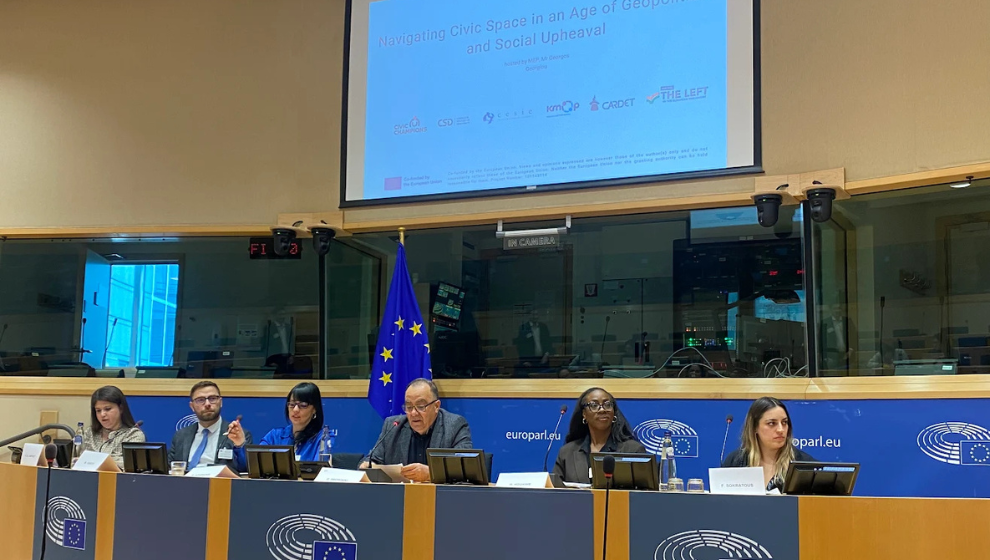
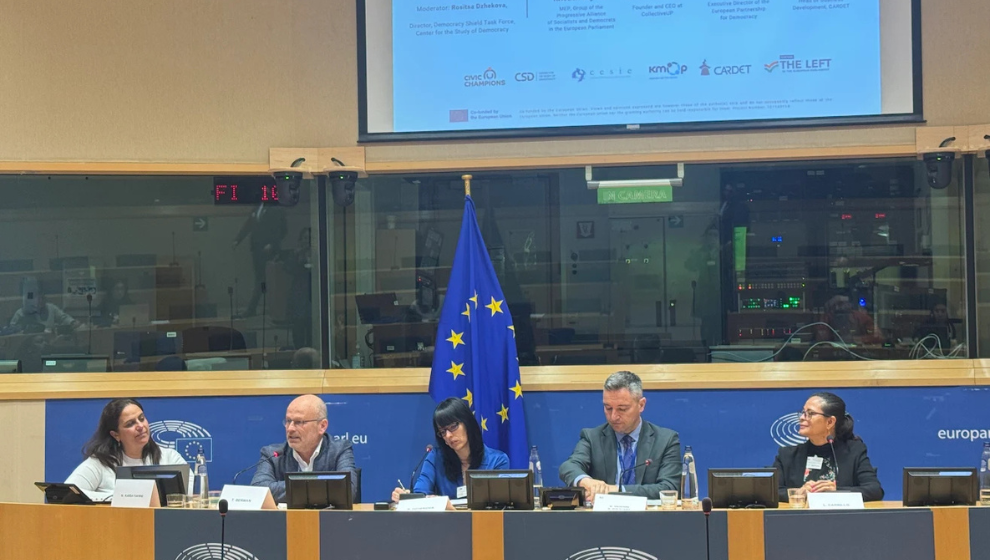
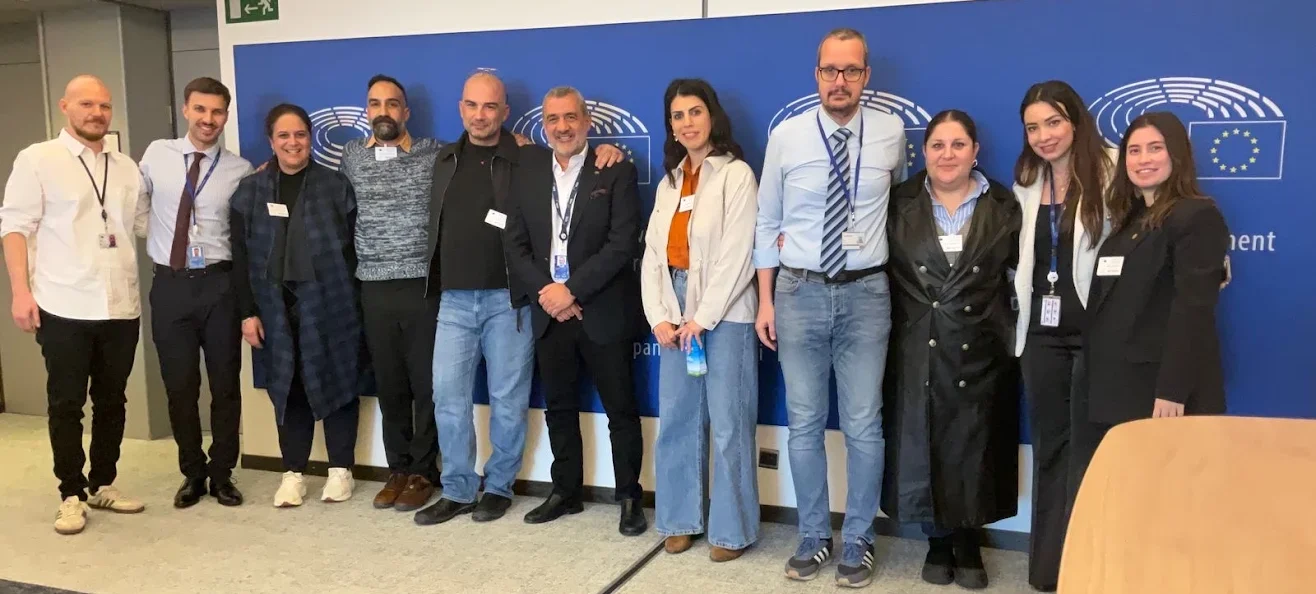
As Cyprus assumed the Presidency of the Council of the European Union in the first half of 2026, the traditional benchmarks of political success are undergoing an attentive reassessment. For decades, the standard of a successful Presidency was measured by the volume of legislative files closed, the efficiency of technical trilogues, or the marginal percentage growth in Eurozone GDP during the six-month mandate. However, as we stand, the global landscape has shifted. The EUPP5 project (EU Presidency Project 5), coordinated by CARDET and its partners, arrives at a critical point where civil society is no longer content with being a secondary observer. Instead, the movement is championing a more profound and human-centric metric for European progress: the Well-being Economy.
This paradigm shift suggests that the motto of the Cyprus Presidency, “An Autonomous Union: Open to the World”, must be interpreted through the lens of social and ecological resilience. True strategic autonomy is not solely about defence budgets or energy independence; it is rooted in the internal strength of a society’s social fabric (Government of Cyprus, 2025).
A Well-being Economy operates on the fundamental principle that “the economy should serve the people and the planet, rather than forcing citizens and ecosystems to adapt to the relentless demands of economic growth” (What Is a Wellbeing Economy: Wellbeing Economy Alliance).
While GDP measures the market value of goods and services, it remains “blind” to social inequalities, mental health crises, and the environmental degradation that often accompany rapid capital accumulation. As noted in the Strategic Foresight Report (2023), sustainability and people’s well-being must be at the heart of Europe’s open strategic autonomy to ensure long-term stability. For Cyprus, a nation facing acute climate risks, such as water scarcity and extreme heat, and social pressures like housing affordability, adopting well-being metrics is not a luxury; it is a survival strategy.
The EUPP5 project serves as an important mechanism in this transition, offering a unique laboratory for participatory democracy. Traditionally, civil society engagement during EU Presidencies has been relegated to symbolic “civil society forums” that offer feedback on pre-decided agendas. The vision for 2026, however, is to move beyond simple consultation toward a model of genuine co-creation. This involves the development of a dedicated Well-being Dashboard, a tool that tracks indicators such as youth mental health, civic trust, and biodiversity loss with the same urgency usually reserved for inflation rates. By integrating these metrics, the Cypriot government can lead the Council in formalising “Beyond GDP” indicators into the European Semester process.
Ultimately, this would ensure that critical issues, such as the European Child Guarantee and housing rights, are treated as economic essentials that underpin the Union’s stability rather than social afterthoughts to be addressed only when budgets allow. The Council Conclusions on Investing in Children recently reinforced this, stating that tackling disadvantages from early years is a cost-effective investment that contributes 3.4% to GDP annually through improved cognitive development and well-being (Investing in the EU’s Future: Council Calls for Greater Efforts to Combat Child Poverty, 2026)
Furthermore, the focus on a Well-being Economy addresses the growing “disconnection” between European institutions and their citizens. When success is measured in billions of Euros of trade, but citizens experience a decline in purchasing power and rising loneliness, a democratic deficit emerges. The Cyprus Presidency has the opportunity to bridge this gap by prioritising the “Social Dimension” of the EU. This means championing policies that support work-life balance, mental health at work, and the transition to a circular economy that creates local, meaningful employment. By doing so, Cyprus can demonstrate that an “Autonomous Union” is one where the citizens feel secure, valued, and empowered to participate in their own governance.
To truly expand the impact of these, we must look at the specific thematic pillars of the EUPP5: Civic Space, Global Climate Justice, and Financing for the Future. Global Climate Justice requires us to acknowledge that the Mediterranean is one of the world’s climate hotspots. A Well-being Economy in this context means investing in water resilience and sustainable agriculture not just for profit, but to ensure the long-term viability of rural communities. Similarly, Financing for the Future should shift capital towards social infrastructure, schools, clinics, and public spaces, that generate “well-being returns” rather than just dividends. The OECD (2020) has argued that better evidence on economic, social, and environmental outcomes can help design more people-centred policies.
The success of the Cyprus 2026 Presidency should not be judged on July 1st, 2026, by a press release highlighting the number of meetings hosted in Nicosia. Instead, it should be evaluated by the legacy of its values. Has it moved the needle on the quality of life for the most vulnerable and marginalised? Has it established a framework where environmental health is seen as a prerequisite for economic health? By championing a Well-being Economy, Cyprus can transition from being a broker of technical deals to a leader of human values. This approach ensures that it remains relevant to the lived experiences of its 450 million citizens, creating a Union that is not just “Open to the World”, but deeply rooted in the well-being of its people.
The project “Towards an open, fair and sustainable Europe in the world – EU Presidency Project 2024-2026” is co-funded by the European Union and implemented by Global Focus, Grupa Zagranica, CARDET, and CONCORD, the European Confederation of NGOs working on sustainable development and international cooperation. Project Number: 2024 / 459-484. The contents of this publication are the sole responsibility of CARDET and do not necessarily reflect the views of the European Union.
Katerina Panagi,
CARDET Researcher and Project Manager
References
UN News (2026). ‘Beyond GDP’ Economists Push for Clearer Metrics on Wellbeing and Sustainability. Geneva: United Nations.
Council of the European Union (2026). Council Conclusions on Investing in Children. Brussels: EU
Council of the European Union (2019). Council Conclusions on the Economy of Wellbeing. Brussels: EU
European Commission (2023). Strategic Foresight Report: Sustainability and Wellbeing at the Heart of Europe’s Open Strategic Autonomy.
Government of the Republic of Cyprus (2025). Programme and Priorities of the Cyprus Presidency of the Council of the EU 2026. Lefkosia.
Investing in the EU’s future: Council calls for greater efforts to combat child poverty. (2026, March 9). Consilium. https://www.consilium.europa.eu/en/press/press-releases/2026/03/09/investing-in-the-eu-s-future-council-calls-for-greater-efforts-to-combat-child-poverty/
OECD (2020). How’s Life? 2020: Measuring Well-being. Paris: OECD Publishing. ZOE Institute for Future-fit Economies (2021). A Vision for a Wellbeing Economy in the EU: Discussion Paper.
What is a Wellbeing Economy: Wellbeing Economy Alliance. (n.d.). https://weall.org/what-is-wellbeing-economy


 Στέφανο Σπανέα, Codeca – Center for Social Cohesion, Development and Care