


Navigating the Digital Frontier: How EUPP5 and the Cyprus EU Presidency are Building a Rights-Based Future for Young Entrepreneurs

The celebratory inauguration of the Cyprus Presidency of the Council of the European Union has given way to a period of intense legislative action as March 2026 progresses. This is a critical time for the country’s youth. Cyprus is using its Presidency to promote a “values-based” digital transformation, one that strikes a balance between an unwavering commitment to fundamental human rights and the aggressive pursuit of technological innovation, given its strategic location at the intersection of Europe, the Middle East, and Africa (ERA Portal, 2026).
The theme of the Cyprus Presidency, An Autonomous Union, Open to the World, is nowhere more visible than in the digital sphere. President Nikos Christodoulides has placed “economic and digital competitiveness” at the heart of the agenda, but with a distinct caution: it must be a transformation that “leaves no one behind” (Council of the EU, 2026).
This past February, the focus has intensified on the European Strategy for Digital Rights and Principles. For young Cypriot entrepreneurs, this means moving beyond simple coding to ‘Ethical by Design’ business models. The EU’s role is crucial here; by integrating rules through the AI Act and the Digital Services Act(DSA), it provides a stable regulatory ‘safety net’ that allows small startups in Cyprus to scale across the single market without the burden of navigating 27 different legal systems (CCIA Europe, 2025).
In the landscape of 2026, entrepreneurship is no longer just about profit; it is about the ‘Twin Transition’—the simultaneous shift toward green and digital solutions. In Cyprus, this is manifesting through targeted actions under the THALIA 2021-2027 programme, which provides significant grants to young innovators aged 18-29 (Youth Wiki, 2025).
Innovation this month is particularly focused on Digital Democracy. This directly links to the work of the EU Presidency Project 5 (EUPP5), implemented in Cyprus by CARDET, and acts as a strategic channel, ensuring that these grassroots digital innovations inform the high-level policy papers being drafted for the Council. By integrating civil society insights into the digital agenda, EUPP5 helps bridge the gap between abstract Brussels regulations and the lived reality of a young founder in the Mediterranean.
A unique pillar of the Cyprus Presidency is its focus on minors’ online safety and digital well-being. In February 2026, coinciding with Safer Internet Day on February 10, the European Commission launched a landmark Action Plan Against Cyberbullying (European Commission, 2026). Cyprus has become a lead advocate for this initiative, pushing for a unified ‘digital age of majority’ across the EU to protect the mental health of the next generation.
For young entrepreneurs, this rights-based landscape is a competitive advantage. In a global economy increasingly wary of data exploitation, European youth can offer products that are inherently transparent and secure. The EU acts as the architect of this ‘trustworthy tech’ ecosystem, funding European Digital Innovation Hubs (EDIHs) that provide startups with access to high-performance computing and AI testing environments that respect European privacy standards (EPC, 2026).
The Presidency recognises that an inclusive digital transformation is impossible without a massive upskilling effort. Projections for 2026 show that while youth are ‘digital natives’, a significant skills gap remains in advanced areas like cybersecurity and AI ethics (Torchio, 2025). To combat this, the Cyprus Presidency is advancing the Union of Skills initiative. This month, informal meetings of Ministers of Education in Nicosia have focused on integrating AI literacy into vocational training and secondary education. By linking these skills to the Youth Guarantee, the EU ensures that every young person has a path toward a high-quality digital career, regardless of their starting point (EARLALL, 2026).
The role of the European Union in 2026 is that of both a safeguard and an accelerator. Through the strategic leadership of the Cyprus Presidency and the supportive framework of projects like EUPP5, the Union is proving that digital progress does not have to come at the cost of human dignity. For the youth of Cyprus and Europe, the digital transformation is not a distant threat to be managed, but a rights-based frontier to be explored, built, and led.
The project “Towards an open, fair and sustainable Europe in the world – EU Presidency Project 2024-2026” is co-funded by the European Union and implemented by Global Focus, Grupa Zagranica, CARDET, and CONCORD, the European Confederation of NGOs working on sustainable development and international cooperation. Project Number: 2024 / 459-484. The contents of this publication are the sole responsibility of CARDET and do not necessarily reflect the views of the European Union.
Katerina Panagi,
CARDET Researcher and Project Manager
Τhis opinion piece was published on Policypress.

LATEST NEWS
 14/10/26
CONCORD AidWatch 2026: EU Development Aid Plummets Amid Widespread Cuts as Global Solidarity Risks Backslide
Official Development Assistance (ODA) from European Union Member States and EU Institutions declined sharply in 2025, dropping by 11.4% in real terms compared to 2024,...
Read more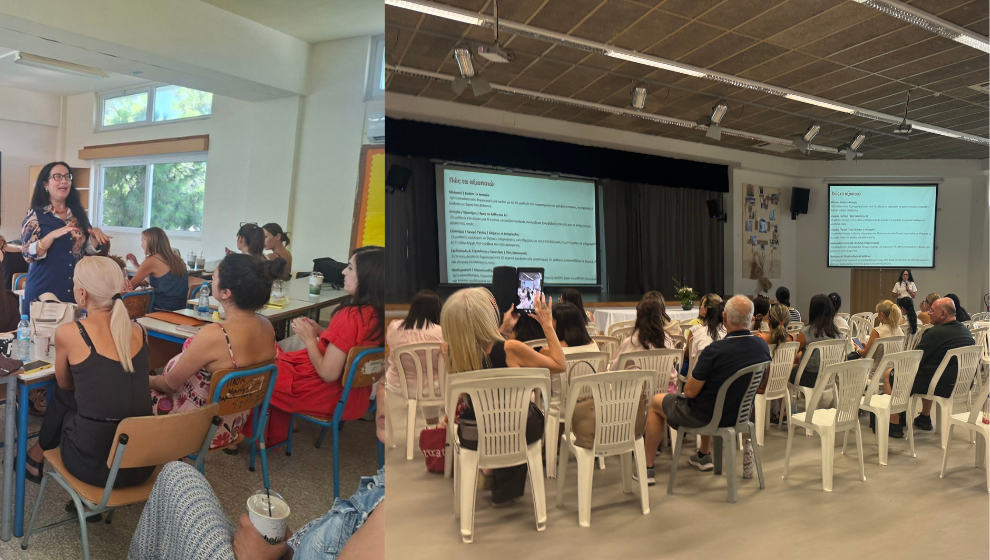 11/09/26
Professional Development Seminars for Teachers Held During the 2026 Teachers’ Two-Day Event
Seven professional development seminars for teachers were successfully delivered as part of the annual Teachers’ Two-Day Event, held from 8 to 10 September 2026 across...
Read more 03/08/26
Young People Shape the Future of Mental Health Support in Cyprus
Young people in Cyprus are helping drive meaningful change in how mental health is understood, prioritised, and supported nationwide. After 26 months of coordinated action,...
Read more