


The Critical Role of Mental Health First Aid

On 13 January 2026, CARDET hosted the launch of a comprehensive Mental Health First Aid and Support training programme, delivered in multiple phases. Thirty participants took part, including healthcare professionals, educators, youth workers, and counsellors. This initiative was not merely another professional development activity; it prompted a deeper reflection: How prepared are we, as adults and as a society, to recognise and support the mental health of young people?
In everyday life, we encounter moments of uncertainty. When a young person or someone close to us begins to withdraw, when concerning signs emerge that are not easily interpreted, and when we are unsure whether or how to act or intervene, difficult questions arise: Was my response appropriate? Did I overlook a warning sign? Do I have the right to ask or become involved?
The need for structured systems, the use of a common language, and practical skills to address the growing youth mental health crisis is now indisputable. Training parents, educators, youth workers, and psychologists in these competencies is essential.
Global data reinforce the urgency of such training. According to the World Health Organization, one in seven adolescents aged 10–19 lives with a mental health condition. This is not an isolated phenomenon, but a widespread reality. Yet nearly two-thirds of young people experiencing mental health challenges do not seek support, primarily due to stigma and discrimination.
The training programme aims to equip those working with young people to act as mental health first aiders. Its core framework is based on the internationally recognised ALGEE Action Plan, which consists of five distinct steps:
A – Approach, assess, and assist: The first, and often most challenging, step involves recognising potential warning signs and initiating a supportive, informal conversation: “I have noticed you have seemed quieter lately. How are you doing?”
L – Listen non-judgmentally: This step emphasises that listening is not about immediately “fixing” the problem. It involves active listening techniques, including the use of silence and reflection, while avoiding dismissive statements such as “Others have it worse” or “Don’t think about it so much”.
G – Give support and information: Providing reassurance helps reduce feelings of isolation, conveying clearly that “You are not alone”, without offering unrealistic assurances such as “Everything will be fine tomorrow”.
E – Encourage appropriate professional help: This stage highlights the importance of collaboration with qualified professionals. An educator does not treat depression but should know how to connect a young person with an appropriate and accredited healthcare professional.
E – Encourage self-help and other support strategies: The final step focuses on empowering young people to regain a sense of control through small, manageable actions and daily habits, such as exercise, listening to music, or connecting with friends.
A central component of the training is the dismantling of pervasive myths that often paralyse adults and silence young people. Misconceptions such as “mental illness is a sign of weakness” or the belief that asking about suicide “plants the idea” are addressed through evidence-based guidance. The programme underscores that mental health exists on a continuum affecting everyone and is shaped by biological, social, and environmental factors, not by character flaws. It also addresses the three forms of stigma: public stigma (societal attitudes), self-stigma (internalised shame), and structural stigma (systemic barriers to care).
Participants learn that safety must always be the primary priority. Importantly, the training programme recognises that no single professional can carry the full responsibility for youth mental health. The role of educators, parents, and youth workers in fostering safe environments is presented as equally critical to the role of psychologists in delivering treatment. Clear and structured referral protocols are emphasised, ensuring that professionals understand whom to notify, involve, and at which stage. Effective support depends on the consistent and uninterrupted application of the process outlined above, guaranteeing that young people receive appropriate assistance at every step.
Finally, meaningful discussions on youth support must also acknowledge the psychological impact on caregivers and professionals themselves. The training introduces the concepts of compassion fatigue (emotional exhaustion resulting from prolonged caregiving) and secondary traumatic stress (internalisation of others’ trauma).
The message is unequivocal: self-care is not a luxury or an act of self-interest, but a professional necessity. Recognising signs of burnout, such as physical exhaustion or emotional detachment, constitutes an organisation’s first line of defence. Establishing boundaries and applying stress-management strategies enable care providers to maintain balance between their professional responsibilities and personal well-being.
Mental Health First Aid extends beyond a set of skills. It represents a shift from a culture of silence to one of active support. By training educators, youth workers, psychologists, and parents within a shared framework, a genuine safety net is created. It ensures that when a young person ultimately finds the courage to say, “I’ m not okay”, someone will be ready to listen, respond, and a system will be prepared to provide support.
The training programme was developed and implemented by CARDET within the framework of the “Supporting Mental Health and Care for the Well-Being of Vulnerable Children and Youth” project. The project is funded by the European Union through the Technical Support Instrument and implemented by UNICEF in cooperation with the European Commission. It is carried out in collaboration with the Ministry of Health of the Republic of Cyprus, with CARDET coordinating and delivering relevant actions supported by the Cyprus Youth Council and the Youth Board of Cyprus.
Dr Charalambos Vrasidas
Founder and Executive Director, CARDET
Professor, University of Nicosia
About the Project
The project Supporting Mental Health Resilience among Youth in Cyprus is funded by the European Commission via the Technical Support Instrument (TSI) and implemented by UNICEF in collaboration with the Ministry of Health of Cyprus. CARDET coordinates the research component with the support of the Youth Board of Cyprus (ONEK) and the Cyprus Youth Council (CYC). Project Reference: ECARO/PCA202294/SPD2024252

LATEST NEWS
 14/10/26
CONCORD AidWatch 2026: EU Development Aid Plummets Amid Widespread Cuts as Global Solidarity Risks Backslide
Official Development Assistance (ODA) from European Union Member States and EU Institutions declined sharply in 2025, dropping by 11.4% in real terms compared to 2024,...
Read more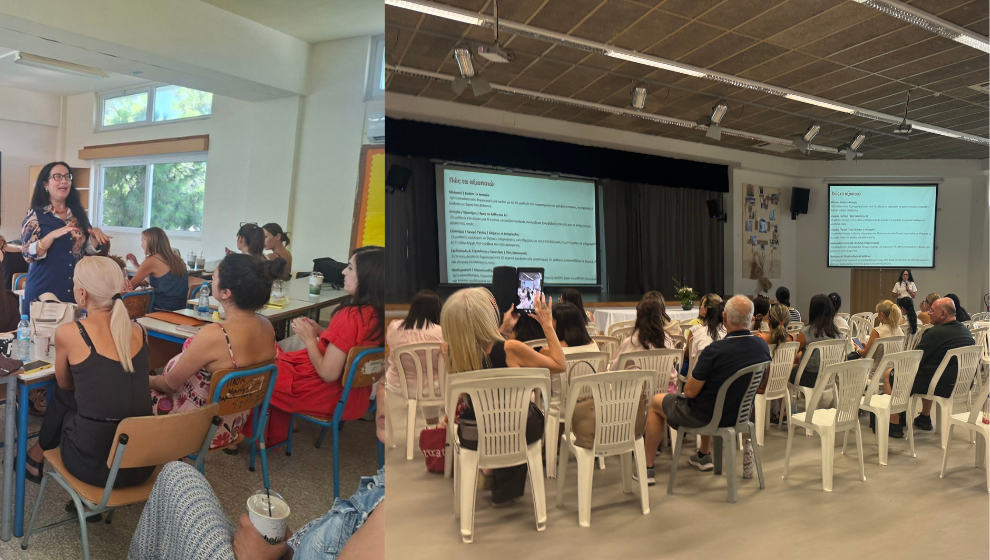 11/09/26
Professional Development Seminars for Teachers Held During the 2026 Teachers’ Two-Day Event
Seven professional development seminars for teachers were successfully delivered as part of the annual Teachers’ Two-Day Event, held from 8 to 10 September 2026 across...
Read more 03/08/26
Young People Shape the Future of Mental Health Support in Cyprus
Young people in Cyprus are helping drive meaningful change in how mental health is understood, prioritised, and supported nationwide. After 26 months of coordinated action,...
Read more