


The Strategy of Truth: Safeguarding Democracy in the Age of Artificial Intelligence

In the world of strategic communication and marketing, we know well that trust is the only currency with real value. Today, Artificial Intelligence, while acting as a driving force for innovation, has simultaneously evolved into the most effective tool for the spread of hybrid threats. Disinformation is no longer an amateur effort aimed at impression-making; rather, it has become an industrialized operation targeting the erosion of institutions and the destabilization of the democratic sphere. From our position as professionals working in the field of information management, we must recognize that protecting the truth is our duty in order to ensure social cohesion.
Digital Erosion and Hybrid Threats
The use of algorithms to generate convincing yet false narratives creates an environment in which the average citizen struggles to distinguish fact from fabrication. This “gap” creates opportunities for exploitation by organized crime and terrorism, while corruption accelerates. With the sheer speed of the digital space, it becomes easy to spread fear or conceal illegal activities. Therefore, the field of cybersecurity cannot be limited to the protection of systems alone; it must also extend to safeguarding the integrity of information itself.
Strategic Solutions and Dynamic Resilience
The transition from merely diagnosing the problem to effectively fortifying against it requires concrete, actionable solutions. A modern democracy must operate with the reflexes of an organism in a constant state of readiness. Crisis preparedness and management in the digital age now rely heavily on our ability to anticipate attacks before they occur. With the help of predictive analytics, we can identify behavioral patterns that signal an impending hybrid attack on infrastructure or a coordinated attempt to manipulate electoral processes.
At the same time, investment in “reverse verification” systems is essential, where Artificial Intelligence itself acts as an auditor, identifying the source and authenticity of content before it influences public opinion. However, the solution is not only technical or technological, but also structural. A robust legislative framework is required to enforce transparency in the algorithms of major platforms, ensuring the protection of citizens’ rights in the digital space. Resilience is not a static condition, but a dynamic process of continuous reinforcement.
Digital Rights as a Value-Based Shield
In our effort to safeguard society, we must not sacrifice the principles that make it free. The protection of rights in the digital space must remain our red line. The use of Artificial Intelligence for security purposes must be governed by transparency and ethics, ensuring that technology serves to protect citizens rather than becoming a tool for indiscriminate surveillance.
Return to Authenticity
For those of us engaged in strategic communication, the message is clear: responding to technological deception requires not only more technology, but also greater authenticity. Safeguarding democracy against hybrid threats and crises can only be achieved when citizens themselves feel safe, informed, and protected. The challenge is to use Artificial Intelligence as a “verification shield”, restoring the value of truth in a digital world that risks losing it.
The project “Towards an open, fair and sustainable Europe in the world – EU Presidency Project 2024-2026” is co-funded by the European Union and implemented by Global Focus, Grupa Zagranica, CARDET, and CONCORD, the European Confederation of NGOs working on sustainable development and international cooperation. Project Number: 2024 / 459-484. The contents of this publication are the sole responsibility of CARDET and do not necessarily reflect the views of the European Union.
Ourania Pavlou
Head of Marketing and Communications, CARDET
The article was published at the PolicyPress.

LATEST NEWS
 14/10/26
CONCORD AidWatch 2026: EU Development Aid Plummets Amid Widespread Cuts as Global Solidarity Risks Backslide
Official Development Assistance (ODA) from European Union Member States and EU Institutions declined sharply in 2025, dropping by 11.4% in real terms compared to 2024,...
Read more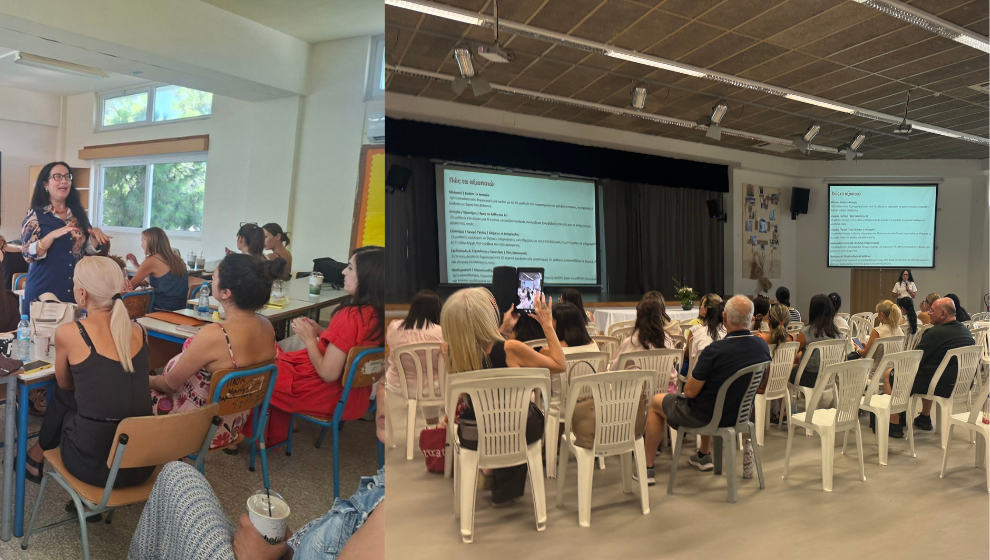 11/09/26
Professional Development Seminars for Teachers Held During the 2026 Teachers’ Two-Day Event
Seven professional development seminars for teachers were successfully delivered as part of the annual Teachers’ Two-Day Event, held from 8 to 10 September 2026 across...
Read more 03/08/26
Young People Shape the Future of Mental Health Support in Cyprus
Young people in Cyprus are helping drive meaningful change in how mental health is understood, prioritised, and supported nationwide. After 26 months of coordinated action,...
Read more