


Financing Global Development: Blended Finance Won’t Close the Gap Alone

Private capital is gaining ground in development finance, but without sustained public investment and structural reform, development finance will never meet its ultimate goal of poverty eradication.
Across policy spaces and international forums, one question keeps returning: how do we finance sustainable development in a world where needs are rising, and public budgets are under pressure?
One approach gaining traction is blended finance. By using public funds to reduce risk, it aims to attract private investment into sectors and regions that would otherwise struggle to access capital. The idea is simple: stretch limited public resources and unlock new flows of funding. And while the concept is appealing, its impact remains limited, and it is far from sufficient to close the growing financing gap.
According to the OECD, the global gap for achieving the Sustainable Development Goals is estimated to be 4 trillion USD annually and expected to rise in the coming years reaching 6,4 trillion USD in 2030. At the same time, development aid is declining. Governments across the globe are cutting aid budgets. In 2025 alone, every fifth dollar of development assistance was cut, including significant reductions for the world’s most vulnerable countries.
Blended finance is often presented as part of the solution. Yet in practice, the scale is still modest. Estimates suggest that only between 15 and 70 billion USD was mobilized globally in 2023, far below what is needed amounting to 4200 billion USD. Even at the highest estimate, blended finance accounts for less than 2 percent of the total financing gap.
The challenge is not only about the money available, but also about how the global economic system is structured.
Many countries receiving development finance face high debt levels, limited fiscal space, and unstable capital flows. At the same time, large amounts of wealth remain untaxed or are shifted across borders. Each year, an estimated 500 billion USD in tax revenue is lost globally – more than global official development aid.
This matters for the debate on development finance because if structural imbalances are not approached, the gap between the available finance and the needs will persist – regardless of how much private funding gets mobilised.
Blended finance can play an important role by supporting investments in areas such as renewable energy and infrastructure, and it can contribute to stimulating markets where they might not otherwise exist. However, it is not an all-encompassing tool, and it cannot replace public finance that remains essential for basic services and rights such as health, education and social protection, as well as strengthening institutions and governance.
A recent study from the Danish civil society platform Global Focus reveals that private capital mobilized in Denmark has mainly supported financial services, large infrastructure projects and energy transition project, while less than 2 percent of the blended finance has been directed towards health, education and sanitation. The same picture emerges in Oxfam, Counterbalance and Eurodad’s examination of EU funding under the high-profile blended finance initiative Global Gateway with the large majority of projects being on climate and energy, closely followed by transport.
The point is not to reject blended finance, but to be clear about what it can and cannot deliver.
Closing the financing gap requires both sustained and predictable public investment and realistic expectations of private capital. But it also requires concrete steps towards a fairer global economic system including stronger tax cooperation and a more sustainable approach to debt. These are not competing priorities; they are interconnected.
As global discussions on development and climate finance continue, the challenge is not only to mobilise more money, but to ensure that it works for those who need it most. Blended finance may be part of the answer, but it cannot close the gap on its own.
The project “Towards an open, fair and sustainable Europe in the world – EU Presidency Project 2024-2026” is co-funded by the European Union and implemented by Global Focus, Grupa Zagranica, CARDET, and CONCORD, the European Confederation of NGOs working on sustainable development and international cooperation. Project Number: 2024 / 459-484. The contents of this publication are the sole responsibility of CARDET and do not necessarily reflect the views of the European Union.
Read more in Globalt Focus’ new analysis on blended finance: https://globaltfokus.dk/images/Analyser/Blended%20finance_English%20version.pdf
Signe Marie Obel,
Policy Advisor, Global Focus
The article was published at the PolicyPress.

LATEST NEWS
 14/10/26
CONCORD AidWatch 2026: EU Development Aid Plummets Amid Widespread Cuts as Global Solidarity Risks Backslide
Official Development Assistance (ODA) from European Union Member States and EU Institutions declined sharply in 2025, dropping by 11.4% in real terms compared to 2024,...
Read more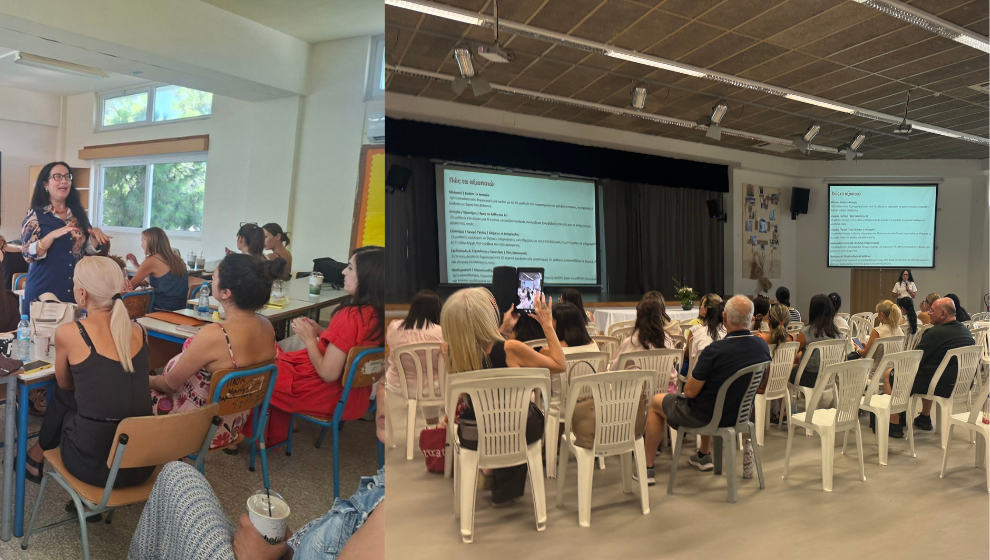 11/09/26
Professional Development Seminars for Teachers Held During the 2026 Teachers’ Two-Day Event
Seven professional development seminars for teachers were successfully delivered as part of the annual Teachers’ Two-Day Event, held from 8 to 10 September 2026 across...
Read more 03/08/26
Young People Shape the Future of Mental Health Support in Cyprus
Young people in Cyprus are helping drive meaningful change in how mental health is understood, prioritised, and supported nationwide. After 26 months of coordinated action,...
Read more