


How Europeans Consume Political Information in the Digital Age

Europe’s public sphere is undergoing a profound transformation. The way citizens consume political and social information is no longer defined primarily by newspapers or evening television bulletins, but increasingly by algorithms, scrolling habits, and the dynamics of digital platforms. The findings of the 2025 Flash Eurobarometer on social media usage reveal more than changing media preferences; they expose a fundamental shift in how democracy itself is experienced across Europe.
Traditional media still matters. Television, in particular, continues to hold a central place in the information habits of Europeans, with 71% of respondents identifying it as a key source of political and social news. Yet digital platforms are rapidly reshaping the landscape, especially among younger generations. Among Europeans aged 15 to 24, 65% now cite social media as their primary source of political and social information, overtaking television entirely.
This is not simply a technological evolution, but a democratic one. Younger citizens are forming opinions, engaging with public affairs, and interpreting world events through platforms designed for speed, personalization, and emotional engagement. Politics increasingly appears in the same digital space as entertainment, influencer culture, and lifestyle content, fundamentally altering how public discourse is consumed.
The shift carries undeniable opportunities. Social media has democratized access to information and broadened participation in debate. Citizens can now interact directly with politicians, journalists, activists, and independent creators without relying solely on traditional media gatekeepers. Voices that once struggled for visibility can now reach millions.
At the same time, however, the risks are impossible to ignore. The survey found that 66% of Europeans believe they encountered fake or misleading information online within just one week prior to the study. Even more concerning is that much of the political content users consume online is encountered passively while browsing for unrelated material. This means that algorithms increasingly shape exposure to political narratives, often prioritizing emotional impact and engagement over accuracy or context.
Perhaps the most striking development is the growing influence of content creators and influencers in shaping public opinion. More than a third of Europeans now follow influencers on social media, while among young people aged 15 to 24 the figure rises dramatically to 74%. In many cases, these creators are no longer confined to lifestyle or entertainment commentary; they are increasingly discussing political and social issues, becoming influential actors within the public sphere despite operating outside traditional journalistic standards or institutional accountability.
This reflects a broader crisis of trust in conventional authority structures. For younger audiences, influencers often appear more authentic, relatable, and accessible than political institutions or mainstream media organisations. The challenge is that visibility and virality are not substitutes for expertise or factual accuracy.
The question facing Europe, therefore, is not whether digital platforms should play a role in democratic life; they already do. The real challenge is whether democratic values can survive within an information ecosystem driven primarily by attention economics. Media literacy is no longer optional. The ability to critically assess sources, identify manipulation, and distinguish fact from opinion has become essential to democratic participation.
Europe cannot afford to approach this transformation with either panic or complacency. Social media is neither the saviour nor the destroyer of democracy. It is a powerful tool that amplifies both informed engagement and disinformation, civic participation and polarization. The responsibility now lies with policymakers, educators, media institutions, and platforms themselves to ensure that the digital public sphere strengthens rather than weakens democratic resilience.
The future of European democracy may increasingly be decided not only in parliaments and polling stations, but in algorithms, recommendation feeds, and the endless scroll of online content competing for citizens’ attention every single day.
The project “Towards an open, fair and sustainable Europe in the world – EU Presidency Project 2024-2026” is co-funded by the European Union and implemented by Global Focus, Grupa Zagranica, CARDET, and CONCORD, the European Confederation of NGOs working on sustainable development and international cooperation. Project Number: 2024 / 459-484. The contents of this publication are the sole responsibility of CARDET and do not necessarily reflect the views of the European Union.
References
European Parliament, Directorate-General for Communication (2025). Flash Eurobarometer 3592: Social Media Survey 2025. Conducted by Ipsos European Public Affairs. Dataset: GESIS, Cologne. https://doi.org/10.4232/1.14703. Available at: https://europa.eu/eurobarometer/surveys/detail/3592
Αcknowledgement of contribution: Veronica Charalambous, Senior Communications Officer, CARDET
Dr Marinos Papaioakeim,
Head of Program Implementation, CARDET
The article was published at the PolicyPress.

LATEST NEWS
 11/09/26
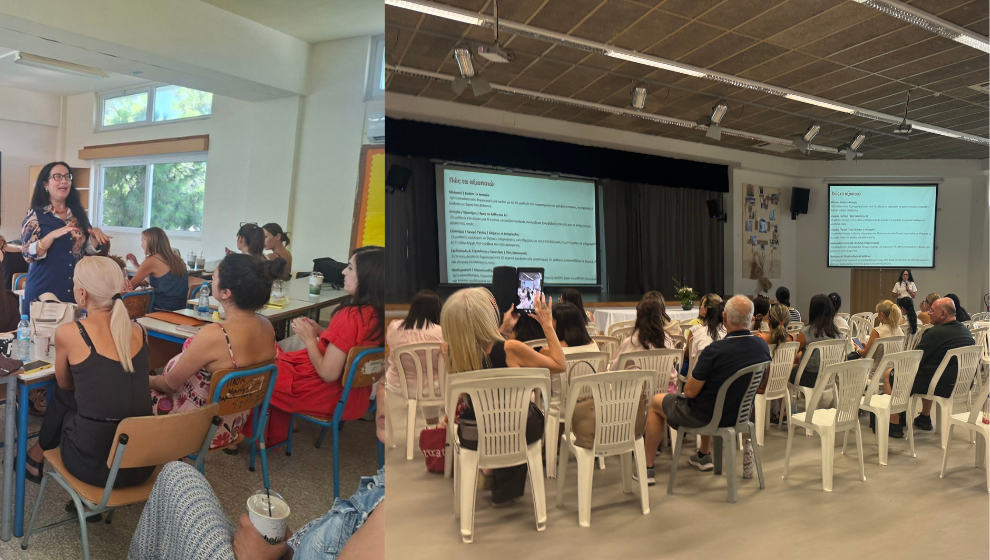
Professional Development Seminars for Teachers Held During the 2026 Teachers’ Two-Day Event
Seven professional development seminars for teachers were successfully delivered as part of the annual Teachers’ Two-Day Event, held from 8 to 10 September 2026 across...
Read more 03/08/26
Young People Shape the Future of Mental Health Support in Cyprus
Young people in Cyprus are helping drive meaningful change in how mental health is understood, prioritised, and supported nationwide. After 26 months of coordinated action,...
Read more 28/07/26
CARDET Launches Two New Policy Papers on Europe’s Digital Democracy and Future Skills
As Europe faces growing challenges in strengthening democratic participation while preparing its workforce for the green and digital transition, CARDET has published two new policy...
Read more