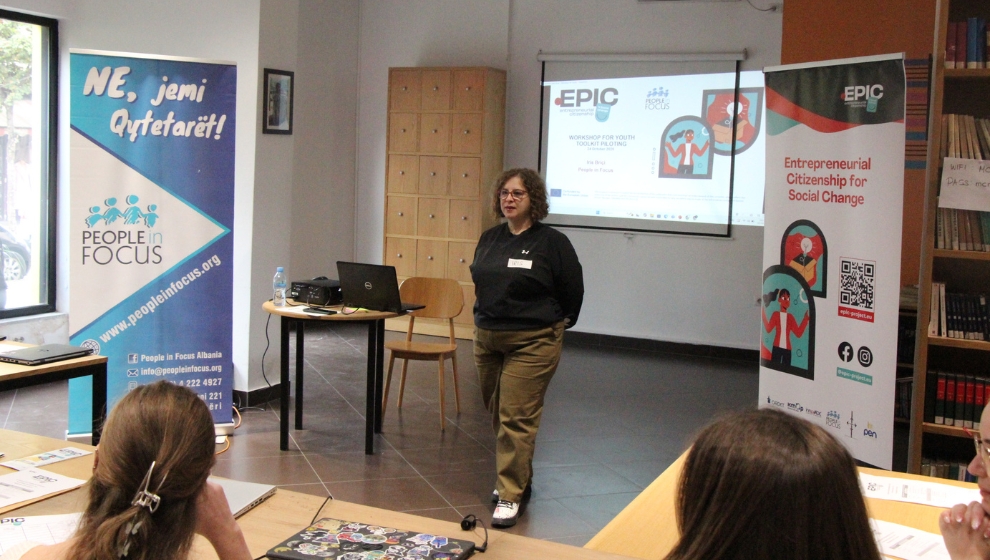
Following the development of the EPIC Training Curriculum on Social Entrepreneurship and the completion of the Train-the-Trainer Workshop and Study Visit in Athens, Greece, the EPIC project advanced to its next crucial phase: the implementation of training activities at local level. These trainings translated the project’s educational resources and methodologies into practice, directly engaging youth workers and young people across the Western Balkans.
Project partners in Albania, Bosnia and Herzegovina, and Kosovo organised and delivered a series of training workshops tailored to two key target groups: youth workers, including professionals and representatives of youth organisations, and young people aged 15–30. The workshops were designed to apply a cascading training model, enabling participants who had graduated from the Training of Trainers (ToT) in Greece to transfer their knowledge, skills, and experience to their local communities.
The primary objectives of the training implementations were to enhance participants’ competencies in social enterprise management, effectively communicate the tools and methodologies developed during the earlier phases of the project, and adapt the EPIC Curriculum to local social and economic realities. Additionally, the workshops aimed to foster sustainable learning communities and strengthen connections among participants, encouraging long-term collaboration and peer learning.
Overall, the training activities reached 60 youth workers and 60 young people, generating high levels of engagement and enthusiasm across all target groups. While initial assessments revealed that many participants had a limited understanding of social entrepreneurship, often associating it primarily with philanthropy, the training sessions successfully shifted perspectives and built a solid foundational understanding of social enterprise principles. Participants also provided valuable feedback and constructive suggestions that will contribute to the further refinement of the EPIC Curriculum.
The training implementations marked a significant milestone for the project, successfully cultivating a culture of social entrepreneurship and inspiring a new generation of young people and youth workers to develop innovative, community-driven solutions for social change.
The EPIC Training Curriculum on Social Entrepreneurship aims to strengthen the entrepreneurial capacities of young people in the Western Balkans by equipping them with practical tools, knowledge, and resources to develop a social entrepreneurship mindset and skill set.
The EPIC project recognises the power of young people as drivers of positive social transformation. It seeks to empower youth workers and young people in the Western Balkans to become active citizens and social entrepreneurs by supporting them in identifying social challenges, developing innovative ideas, and transforming those ideas into sustainable social enterprises.
Aligned with the EU’s EaSI (2020) perspective, EPIC highlights the role of social enterprises in addressing social issues through civic engagement, particularly among disadvantaged groups. By promoting social entrepreneurship, the project contributes to reducing youth unemployment, fostering community development, and creating meaningful job opportunities in underserved social and environmental sectors.
The EPIC project specifically aims to:
- Foster cooperation across regions through joint initiatives
- Strengthen the capacity of organisations working with young people outside formal education
- Support the development of quality youth work
- Promote non-formal learning and active youth participation in society
More information about the project is available at: https://epic-project.eu/

Website
https://epic-project.eu/Target Groups
Students, Youth, Adults, Trainers, General publicEducation Level
Higher education, VET, Adult education, Professional education