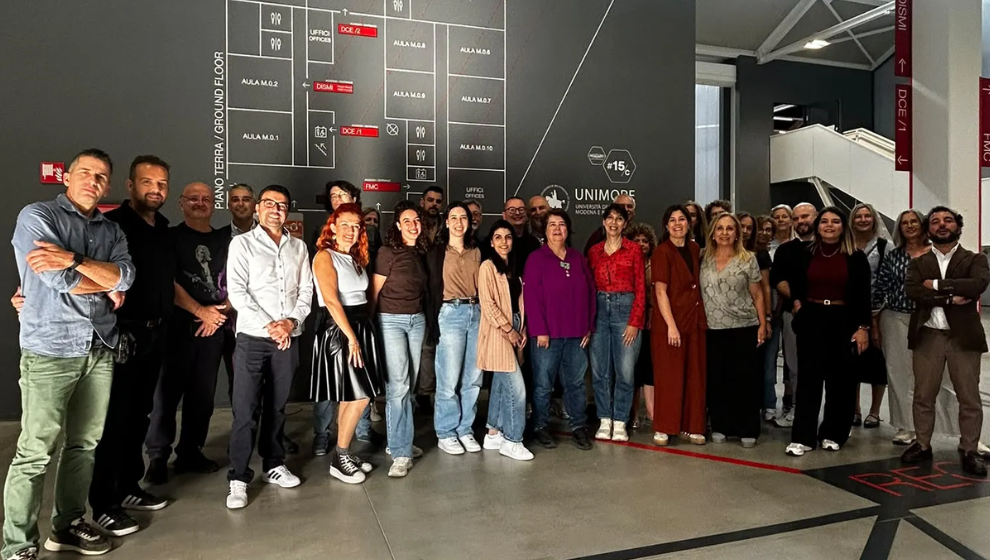
The Digital Harmony consortium continues to advance its mission of promoting digital well-being across generations, with its latest contribution presented at the 5th International Education Conference (IECONF 2026), held in Dublin, Ireland, from 24 to 26 July 2026.
Representing the consortium, Elena Xeni (CARDET, Cyprus) delivered a presentation entitled “Bridging the Generational Divide: A Cross-National Analysis of Digital Well-being and Joint Learning Frameworks in European Education”. The presentation showcased the findings of Digital Harmony’s transnational research, which examined digital well-being challenges and opportunities across eight European countries: Cyprus, Czech Republic, Germany, Greece, Ireland, Poland, Portugal, and Spain.
The research explores two pressing challenges that have become increasingly evident in the post-pandemic digital landscape. While younger generations are navigating issues such as excessive screen time, cyberbullying, and online stress, older adults often face digital exclusion as more essential services move online.
To address these challenges, Digital Harmony promotes an innovative intergenerational learning model that transforms primary and secondary schools into community hubs where knowledge is shared across generations. Through this reciprocal approach, young people support older adults in developing digital skills, while seniors contribute valuable life experience, emotional resilience, and critical thinking to help younger generations build healthier relationships with technology.
The project has also developed tailored learning pathways for students, senior learners, and educators, providing practical resources that foster digital competence, inclusion, and well-being for all.
The presentation generated valuable discussion among international researchers and education professionals, highlighting the growing importance of collaborative approaches that strengthen digital resilience across European communities.
To learn more about the Digital Harmony project and explore its learning modules, visit https://digital-harmony.eu/.

Website
https://digital-harmony.eu/Target Groups
Teachers, Students, School leaders, School staff, Parents, Academics, Researchers, Professionals, Youth, Adults, Policy makers, Adult educators, General public, ElderlyEducation Level
Primary education, Teacher education, Adult education