


Rule of Law, Democracy, and Human Rights in 2026

In 2026, the concepts of the rule of law, democracy, and human rights continue to constitute fundamental values of Europe and the international community. However, contemporary developments on a global scale raise legitimate concerns regarding their protection and effective implementation.
Ongoing conflicts, humanitarian crises, hate speech, and attacks against vulnerable social groups, such as the LGBTQI community, highlight the serious challenges currently facing human rights. According to a recent survey by the European Union Agency for Fundamental Rights, 14% of LGBTQI individuals in Europe reported having been victims of physical or sexual assault over the past five years, an increase compared to previous years, demonstrating that, despite institutional progress, the social reality remains alarming.
At the same time, the questioning of democratic institutions, pressures on the independence of the judiciary, and limited tolerance toward differing opinions further intensify concerns regarding the safeguarding of the rule of law. In its 2025 Annual Rule of Law Report, the European Commission notes that, despite reforms implemented in several Member States, significant challenges persist in areas such as media freedom, transparency, institutional checks and balances, and the protection of civil society.
The rule of law, democracy, and human rights are inextricably linked. The existence of democratic institutions presupposes respect for fundamental freedoms, while the effective protection of human rights strengthens democratic participation and social cohesion. Likewise, institutional independence and freedom of expression constitute essential prerequisites for maintaining a strong rule of law.
At the same time, the spread of disinformation, the targeting of journalists, and the rise of extremist narratives create an environment of heightened uncertainty for the democratic functioning of societies. Recent European reports record increasing pressures on media freedom and declining public trust in information institutions across several European countries.
In an era where words often seem to lose their true meaning and facts themselves become distorted, reminding many of the dystopian reality depicted in “1984” by George Orwell, the need to defend democratic values becomes even more urgent. Safeguarding the rule of law and human rights is not only the responsibility of states and institutions, but also the collective duty of every democratic society.
Within this context, alongside the actions of the Cypriot Presidency of the Council of the EU, the European programme EU Presidency Project 5 (EUPP5), implemented in Cyprus by CARDET, contributes to strengthening democracy and the rule of law by promoting the active participation of civil society in public dialogue and decision-making processes. Through collaboration among citizens, organisations, and institutions, as well as the organisation of workshops and public discussions on critical issues, transparency and participatory governance are reinforced, thereby contributing to the protection of democratic values and fundamental rights in Europe. Preserving an open, inclusive, and tolerant Europe depends on constant vigilance against every form of authoritarianism, discrimination, and restriction of fundamental freedoms.
Therefore, within an environment marked by uncertainty and challenges, the protection of human rights remains a beacon of hope, democracy, and change for a society founded on respect, equality, and human dignity.
The project “Towards an open, fair and sustainable Europe in the world – EU Presidency Project 2024-2026” is co-funded by the European Union and implemented by Global Focus, Grupa Zagranica, CARDET, and CONCORD, the European Confederation of NGOs working on sustainable development and international cooperation. Project Number: 2024 / 459-484. The contents of this publication are the sole responsibility of CARDET and do not necessarily reflect the views of the European Union.
Foteini Sokratous,
Project Manager, CARDET
The article was published at the PolicyPress.

LATEST NEWS
 14/10/26
CONCORD AidWatch 2026: EU Development Aid Plummets Amid Widespread Cuts as Global Solidarity Risks Backslide
Official Development Assistance (ODA) from European Union Member States and EU Institutions declined sharply in 2025, dropping by 11.4% in real terms compared to 2024,...
Read more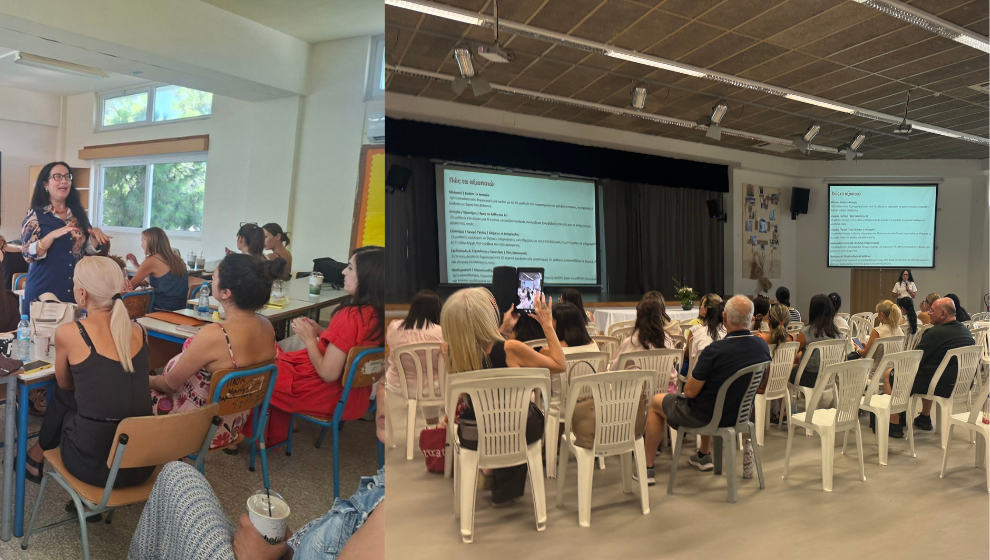 11/09/26
Professional Development Seminars for Teachers Held During the 2026 Teachers’ Two-Day Event
Seven professional development seminars for teachers were successfully delivered as part of the annual Teachers’ Two-Day Event, held from 8 to 10 September 2026 across...
Read more 03/08/26
Young People Shape the Future of Mental Health Support in Cyprus
Young people in Cyprus are helping drive meaningful change in how mental health is understood, prioritised, and supported nationwide. After 26 months of coordinated action,...
Read more