


Empowering Citizens: Opportunities to Participate in Policymaking in Cyprus and the European Union

Active citizen participation is a cornerstone of any healthy democracy. Across both Cyprus and the European Union, individuals today have more opportunities than ever to contribute to policymaking processes, express their views, and shape decisions that affect their daily lives. However, awareness of these tools remains limited. Strengthening this awareness is essential to building a more inclusive, transparent, and participatory democratic culture.
This article is developed in the context of the project “Civic Space in Action: Youth, Civil Society and the EU’s Global Role”, implemented under the EUPP5 Small Grants Scheme. The project aims to strengthen civic space and democratic participation in Cyprus by empowering citizens-especially young people and civil society organisations-to actively engage in public decision-making and promote European values within public discourse.
Participatory Tools in Cyprus
In Cyprus, digital governance reforms have introduced a range of tools that allow citizens to actively participate in policymaking and interact with public authorities. These tools are accessible through the government’s participation portal: https://www.diakivernisi.gov.cy/gr/symmetexo.
The platform includes several key mechanisms. Through e-Consultation (η-Διαβούλευση), citizens can take part in structured public consultations during the legislative process, providing feedback on draft laws and policies before they are finalised. The e-Suggestion (e-εισήγηση) tool allows individuals to submit ideas and proposals directly to decision-making centres, encouraging bottom-up contributions to policymaking.
In addition, the platform “Voice of the Citizen” (Φωνή του Πολίτη) enables direct communication between citizens and public authorities, strengthening responsiveness and institutional dialogue. The “Expression” (Έκφραση) platform focuses particularly on youth, facilitating communication between young people and the executive branch. Finally, the Advisory Council (Γνωμοδοτικό Συμβούλιο) supports participatory governance by contributing to the preparation and coordination of public appointments and broader institutional processes.
Participatory Opportunities in the European Union
At the European level, citizens also have several powerful tools to influence policymaking. The European Citizens’ Initiative (ECI) allows citizens to invite the European Commission to propose legislation by gathering at least one million signatures across Member States, making it one of the most direct forms of transnational participation.
Citizens may also submit petitions to the European Parliament, raising concerns or requesting action on issues within the EU’s competences. In parallel, the European Commission’s public consultations provide structured opportunities for individuals and organisations to contribute to the development of policies and legislation.
Beyond formal mechanisms, participation is also facilitated through engagement with civil society organisations, advocacy networks, and stakeholder platforms, which play a crucial role in shaping policy debates at the European level.
Why Participation Matters
Citizen participation plays a fundamental role in strengthening democracy. By enabling individuals to contribute their perspectives, it improves both the quality and legitimacy of public policies, ensuring that decisions are better informed and more representative of societal needs. At the same time, participatory processes enhance transparency and accountability, as they open up decision-making to public scrutiny. This, in turn, helps build trust between citizens and institutions-an essential element for democratic stability. Moreover, active engagement fosters a sense of responsibility among citizens, encouraging a culture of participation that goes beyond elections. Despite the growing availability of participatory tools at both national and European levels, these opportunities remain underutilised. Addressing this gap is therefore critical to ensuring that democratic systems function effectively and inclusively.
Building a Stronger Civic Space
In this context, the project contributes to strengthening civic space through a combination of public discussions, training workshops, and targeted communication activities. These actions aim to increase awareness of existing participatory tools while equipping citizens and civil society actors with the necessary knowledge and skills to engage meaningfully in democratic processes. By creating new and accessible spaces for dialogue, the project facilitates constructive interaction between citizens and institutions. Importantly, it also bridges the local and European dimensions of participation, demonstrating how engagement at the national level can connect with broader EU policymaking processes. Through this approach, the project highlights the role of citizens not only as participants in governance but also as active contributors to addressing wider European and global challenges.
Conclusion
Democracy does not end at the ballot box. It is a continuous process that requires active engagement from citizens. Whether through national platforms in Cyprus or EU-level mechanisms, individuals today have meaningful opportunities to influence policymaking and contribute to shaping the future of their societies.
The key challenge lies in awareness and participation. An informed and active citizenry is essential to ensuring that democracy remains resilient, inclusive, and responsive to the needs of all.
The project “Towards an open, fair and sustainable Europe in the world – EU Presidency Project 2024-2026” is co-funded by the European Union and implemented by Global Focus, Grupa Zagranica, CARDET, and CONCORD, the European Confederation of NGOs working on sustainable development and international cooperation. Project Number: 2024 / 459-484. The contents of this publication are the sole responsibility of CARDET and do not necessarily reflect the views of the European Union.
George Isaia,
Executive Director, Oxygen for Democracy
The article was published at the PolicyPress.

LATEST NEWS
 14/10/26
CONCORD AidWatch 2026: EU Development Aid Plummets Amid Widespread Cuts as Global Solidarity Risks Backslide
Official Development Assistance (ODA) from European Union Member States and EU Institutions declined sharply in 2025, dropping by 11.4% in real terms compared to 2024,...
Read more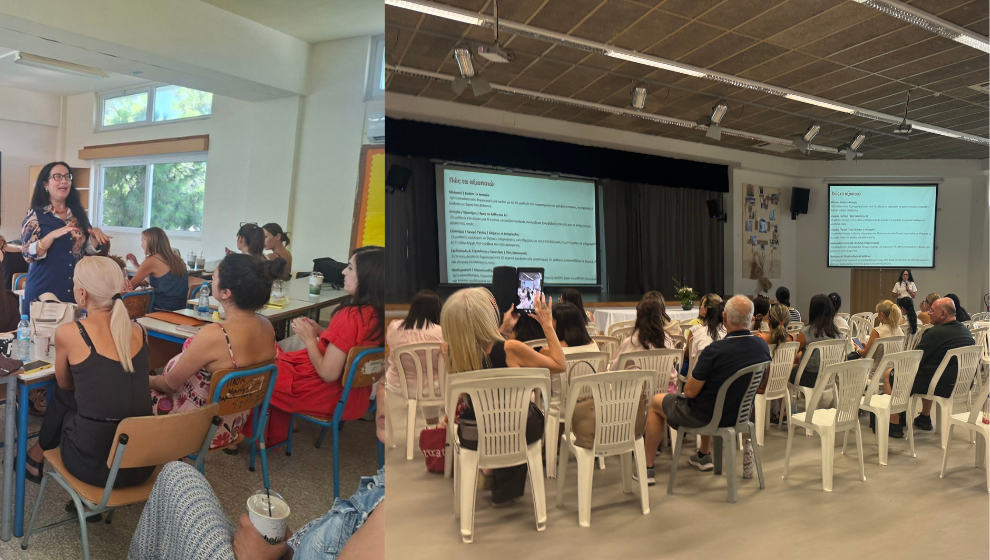 11/09/26
Professional Development Seminars for Teachers Held During the 2026 Teachers’ Two-Day Event
Seven professional development seminars for teachers were successfully delivered as part of the annual Teachers’ Two-Day Event, held from 8 to 10 September 2026 across...
Read more 03/08/26
Young People Shape the Future of Mental Health Support in Cyprus
Young people in Cyprus are helping drive meaningful change in how mental health is understood, prioritised, and supported nationwide. After 26 months of coordinated action,...
Read more