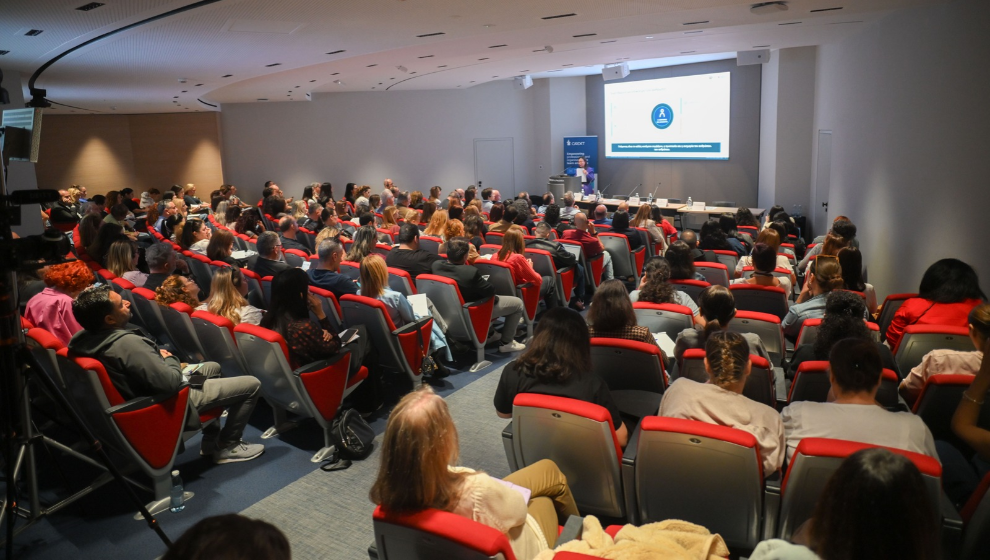
As the national coordinators of Global Education Week in Cyprus, CARDET and the Cyprus Pedagogical Institute co-organised an event on 17 November 2026 entitled “Teaching Democratic Citizenship: Anti-Racist Pedagogies and the Promotion of Human Rights in the Classroom”.
Held as part of Global Education Week 2026 (#GEW2026), within the framework and the support of the REM Heritage project, the event brought together educators and education professionals to explore how schools can promote democratic citizenship, respect for human rights, inclusion and social justice through meaningful educational practices.
The event opened with welcoming remarks by Dr. Pavlina Hadjitheodoulou-Loizidou, on behalf of Dr Elena Hadjicacou, Director of the Cyprus Pedagogical Institute. The Global Education Week initiative was then presented by Dr Elena Papamichael, Educational Planning Officer A at the Cyprus Pedagogical Institute, and Michaela Protopapa, Team Coordinator of the Project Management Unit at CARDET.
The programme featured a keynote presentation by Dr Nasia Hadjigeorgiou, Associate Professor and Lecturer in Transitional Justice and Human Rights Law at UCLan Cyprus, entitled “Human Rights in Cyprus: Perspectives and Reflections for Schools”. The presentation was followed by a discussion moderated by Dr Elena Papamichael, providing participants with an opportunity to reflect on the challenges and opportunities associated with human rights education in the Cypriot school context.
Experiential Workshops for Educators
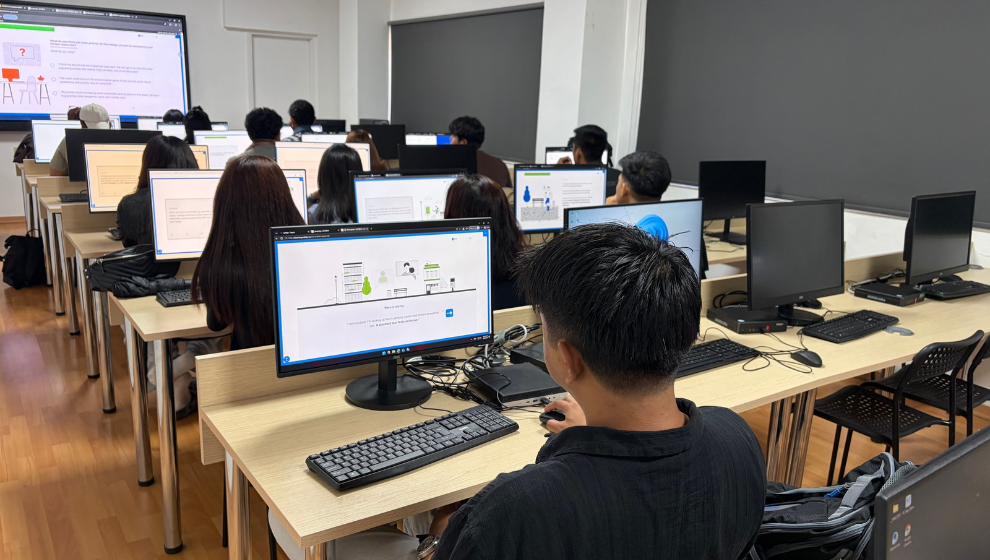
The event also featured three parallel experiential workshops, offering participants practical approaches and pedagogical tools for addressing historical memory, peace education and social justice in the classroom.
“Teaching Historical Trauma and Intergenerational Memory: Pedagogical Principles from Holocaust Education and Experiential Classroom Approaches”, delivered by Maria Polychrona, Philologist and Teacher Ambassador for Peace. The workshop explored educational principles and methodological tools from Holocaust education that can be applied to teaching traumatic historical events and approaching historical memory. Through historical sources, personal testimonies, biographical narratives and authentic objects, participants examined ways to foster critical historical interpretation and create safe learning environments.
“Critical Peace Pedagogy in the Contemporary School: Building Bridges of Inclusion and Social Justice”, delivered by Dr Petroula Antoniou, Officer at the Cyprus Pedagogical Institute. The experiential workshop focused on the principles of a culture of peace and non-violence, equality and mutual respect in schools. Participants explored the concept of positive peace and practical approaches to addressing social inequalities.
“Can History Teach Peace? Contradictions and Perspectives”, delivered by Dr Loukas Perikleous, Officer at the Cyprus Pedagogical Institute. The workshop examined the potential and limitations of history teaching as a means of promoting peaceful attitudes, presenting practical strategies for developing historical literacy and addressing conflicting narratives and sensitive historical issues.
Through presentations, discussions and experiential learning activities, participating educators explored practical ways to strengthen democratic citizenship, human rights education, inclusion and social justice within school communities.
Supporting Historical Memory Through REM Heritage
The event was organised with the support of the European project REM Heritage, implemented in Cyprus by CARDET. The project promotes education and the active participation of different generations in preserving the memory of the Holocaust.
Through educational workshops, digital storytelling, awareness-raising campaigns and the establishment of a Young Ambassadors Network, REM Heritage aims to combat Holocaust denial and distortion while keeping the lessons of the Holocaust alive and relevant for younger generations.
By bringing together educators, experts and education stakeholders, initiatives such as Global Education Week and REM Heritage contribute to strengthening dialogue, historical awareness and collective action towards more inclusive, democratic and human rights-based societies.

Target Groups
Teachers, Students, School leaders, School staff, Academics, Researchers, Professionals, Youth, Adults, Policy makers, Public bodiesEducation Level
Primary education, Secondary