The conference was held as part of the final event of the European TINKER project, which promotes the transformation of Informatics education through authentic learning and gender inclusion.
Bringing together representatives from the academic, educational and research communities, the Cyprus Education Summit 2026 took place on Friday, 6 November 2026, under the central theme “The School in the Digital Age: Technology and Inclusion”. Hosted at the UNESCO Amphitheatre of the University of Nicosia, the conference focused on contemporary developments in education, the use of Artificial Intelligence, emerging pedagogical approaches and digital wellbeing.
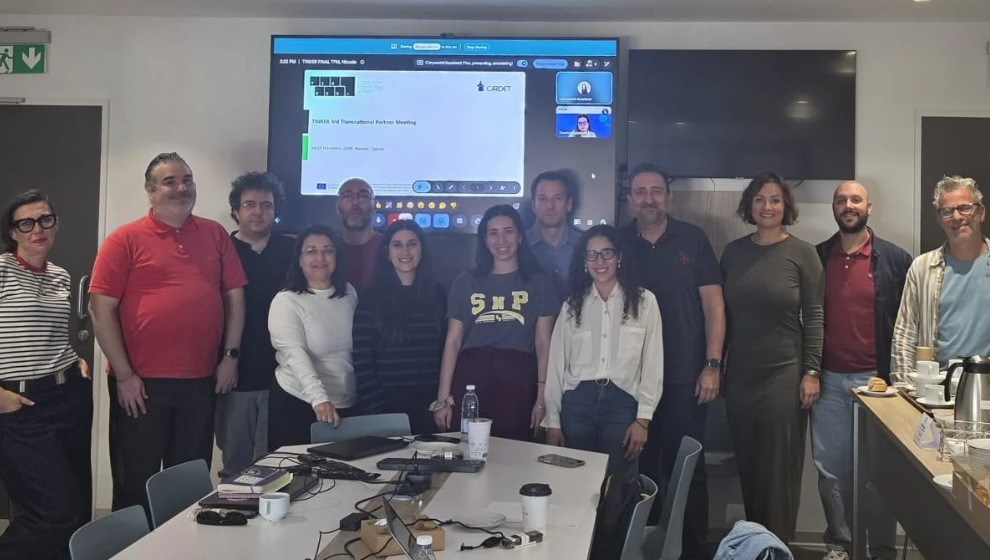
The conference was organised by the research centre CARDET, the Cyprus Pedagogical Institute and the Ministry of Education, Sport and Youth, with the University of Nicosia as co-organiser. The Teacher Wellbeing & Career Observatory participated as a research partner, while the event also marked the final conference of the European project TINKER (Transforming Informatics Education through Authentic Learning and Gender Inclusion).
In her opening address, delivered through a recorded message, the Minister of Education, Sport and Youth, Dr Athena Michaelidou, addressed the participants at the beginning of the conference proceedings.
The welcome session featured remarks by Dr Dionysios Anastasopoulos, Deputy Regional Director of Primary and Secondary Education of Attica, followed by Dr Charalambos Vrasidas, Executive Director of CARDET and Professor at the University of Nicosia.
Dr Vrasidas then delivered a presentation entitled “Technology, Learning and the Human: What Have We Learned in the Last 100 Years?”, exploring the relationship between technology, learning and the human dimension.
Subsequently, Dr Elena Hadjikakou, Director of the Cyprus Pedagogical Institute, presented the “Policy Document and Guidelines for the Responsible and Ethical Utilisation of Artificial Intelligence in Primary and Secondary Education”, highlighting the relevant policy framework and guidelines for the use of Artificial Intelligence in education.
As part of the keynote session, Giuseppe Mossuti, Project Manager at European Schoolnet, delivered a presentation entitled “Teaching Authentic and Gender-Inclusive Informatics in Schools across Europe”, focusing on contemporary pedagogical approaches to Informatics education.
The TINKER Project: Transforming Informatics Education through Authentic Learning and Gender Inclusion
A dedicated session of the conference focused exclusively on the European TINKER project, which aims to transform the teaching of Informatics in primary and lower secondary education through a comprehensive pedagogical framework grounded in the principles of authentic learning.
The project encourages students to engage in real-world activities and problem-solving, connecting theoretical knowledge with practical experiences. At the same time, it promotes inclusive teaching practices and learning environments that recognise and encourage diversity.
Two presentations were delivered as part of this session:
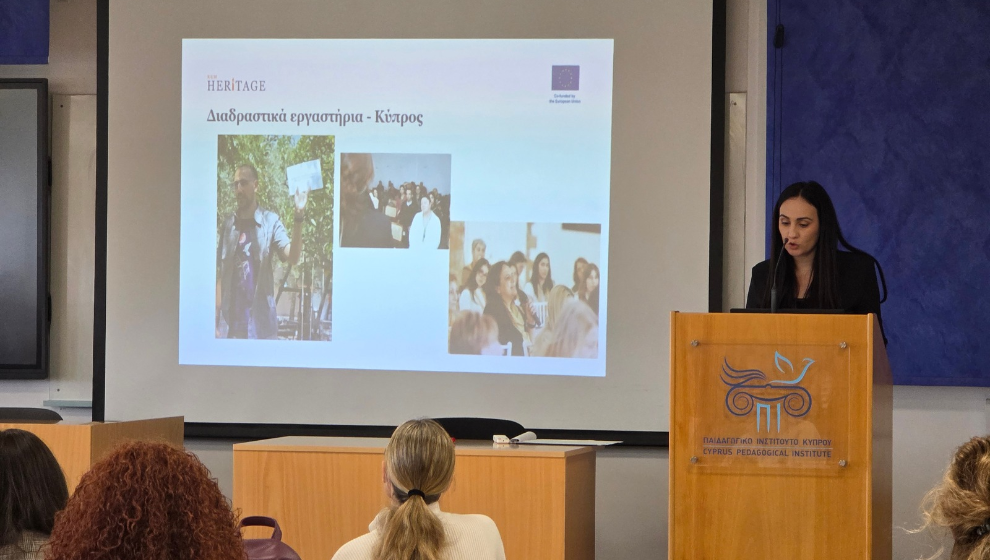
- Eleni Trichina, PhD Candidate, School of Business, QA & Innovation Coordinator, Distance Learning Unit, University of Nicosia, presented “Transforming Informatics Education through Authentic Learning and Gender Inclusion”, introducing the project’s pedagogical approach and objectives.
- Chrysanthi Konstanti, Senior Researcher at CARDET, presented “Implementing TINKER in Schools across Europe: Experiences and Lessons Learned”, highlighting the project’s implementation and the experiences gained through its application in schools.
Panel Discussions: Approaches and Perspectives
The programme featured two panel discussions, bringing together academics, researchers and education professionals from Cyprus and other European countries.
The first panel discussion, entitled “Digital Skills and Artificial Intelligence in Education”, was facilitated by Dr Charalambos Vrasidas, Executive Director of CARDET and Professor at the University of Nicosia. The panel featured:
- Dr Christos Roushias, Teacher Educator – Educational Technologist at the Cyprus Pedagogical Institute.
- Dr Dimitrios Tzimas, Researcher at the Department of Informatics, Aristotle University of Thessaloniki (AUTh), and Principal of the Evening High School of Kastoria.
- Dr Efi Nisiforou, Assistant Professor in Educational Technology, School of Education, University of Nicosia.
- Dr Konstantinos Amplianitis, Research Scientist at the School of Computer Science, University College Dublin.
- Fani Karaoli, Researcher, Education & European Programmes Coordinator, Regional Directorate for Primary and Secondary Education of Attica.
The second panel discussion, conducted in English, was entitled “Gender-Inclusive Practices and Digital Wellbeing in Schools across Europe”. It was facilitated by Dr Lucy Avraamidou, Professor of Science Education and Communication at the University of Groningen. The panel featured:
- Giuseppe Mossuti, Project Manager at European Schoolnet.
- Katarina Vuksan, Project Manager at CESIE ETS.
- Dr Juraj Petrović, Associate Professor, PhD, University of Zagreb, Faculty of Electrical Engineering and Computing.
- Dr Luana Silveri, PhD, Postdoctoral Researcher at the University of Groningen, Centre for Learning and Teaching.
Both panel discussions concluded with open discussions involving the audience, providing opportunities to exchange views and experiences on the topics explored.
The Cyprus Education Summit 2026 concluded by highlighting the importance of collaboration, knowledge exchange and the use of research to advance contemporary education. The presentations and discussions brought forward different approaches and perspectives on integrating technology into the learning process, developing digital skills, promoting authentic learning and creating safe and inclusive school environments.
For more information: https://cypruseducationsummit.com/
Summit Short Video Highlights: https://www.facebook.com/reel/2649251802181763

Website
https://tinker-project.eu/Target Groups
Teachers, Students, School leaders, School staff, Academics, Researchers, Professionals, Policy makers, TrainersEducation Level
Primary education, Secondary