


The Next European Budget as a Test for Democracy and Civil Society
The European Union is currently at a critical stage in shaping its next Multiannual Financial Framework (MFF) for the period 2028-2034. As the EU’s long-term budget, the MFF will determine how European resources are allocated over the next seven years, influencing investments in social cohesion, competitiveness, the green and digital transitions, education, democracy, human rights, external action, and support for citizens.
For civil society, this discussion is neither technical nor distant. It is deeply political and directly connected to the kind of Europe we want to build in the years ahead. The European budget does not simply reflect financial priorities. It reflects values. It demonstrates what Europe chooses to protect, strengthen, and maintain at the heart of its political action.
Over recent years, civil society organisations at both European and local levels have played a vital role in supporting vulnerable groups, defending human rights, strengthening social cohesion, promoting sustainable development, and keeping democratic dialogue alive. At the same time, they operate in an increasingly challenging environment characterised by limited resources, growing administrative burdens, shrinking civic space, successive crises, and the need to respond rapidly to emerging social challenges.
This is why the debate surrounding the MFF 2028-2034 has mobilised a broad range of organisations and European networks. Networks such as CONCORD Europe, Civil Society Europe, SOLIDAR, and many other European platforms have made it clear that support for civil society cannot be treated as a supplementary or secondary issue. Rather, it must be recognised as a prerequisite for a resilient, democratic, and socially just Europe.
In Cyprus, this discussion has also been advanced through the EUPP5 programme, “Towards an Open, Fair and Sustainable Europe in the World”, with CARDET coordinating awareness-raising, dialogue, and advocacy activities at both national and European levels. Cypriot civil society has contributed to a broader European effort to ensure that the voices of organisations are heard before key decisions are finalised. These discussions have focused on funding mechanisms, access to EU programmes for NGOs, the protection of human rights, and the need for organisations to participate in the design of policies that affect them.
These collective efforts have already yielded results. The proposed AgoraEU programme, which aims to bring together and strengthen the fields of culture, media, and civil society, represents an important development. The provision of increased funding for values, democracy, equality, rights, and citizen participation demonstrates that sustained advocacy by civil society at the European level has had a tangible impact. The discussion surrounding CERV+, within the framework of AgoraEU, acknowledges that organisations working on rights, democratic participation, and equality require stronger, more accessible, and more predictable funding mechanisms.
At the same time, the adoption of the new EU Civil Society Strategy marks another positive step forward. The creation of a new dialogue platform for civil society, the development of tools to monitor and protect civic space, and the recognition of the need for sustainable funding contribute to a clearer political framework. For the first time, support for civil society is being more explicitly linked to the resilience of democracy across Europe.
Despite these positive developments, the work is far from complete. Experience has shown that strategic recognition alone is not enough unless it is accompanied by clear implementation mechanisms, adequate resources, and meaningful participation by organisations in decision-making processes. The critical question is no longer whether the EU recognises the role of civil society. The real question is who will implement this strategy, how it will be implemented, according to what timeline, through which indicators, and with what accountability mechanisms.
Similarly, several important issues within the MFF negotiations remain unresolved. The final allocation of funding across different categories of European programmes has yet to be determined. Negotiations within the Council and with the European Parliament are ongoing, while funding arrangements and broader horizontal issues remain subject to political negotiation. This means that civil society organisations must continue to closely monitor developments, contribute evidence-based recommendations, and cooperate at both European and national levels.
For Cyprus in particular, the discussion has an additional dimension. The priorities established within national and regional plans, especially regarding structural funds and social cohesion investments, will largely determine whether the needs of civil society are meaningfully integrated or remain marginalised. NGOs in Cyprus require access to more flexible funding, support for organisational development, opportunities to participate in policy design, enhanced transparency, and recognition of their role as partners of the state rather than merely implementers of individual projects.
Civil society should not be called upon only during times of crisis. Nor should it be recognised only when it reaches communities and individuals beyond the scope of public services. It must have a place in policy design, consultation, monitoring, and evaluation processes that directly affect citizens.
The coming period will be crucial. Discussions on the MFF will continue at both technical and political levels, while the decisions taken will directly shape the operational capacity of civil society organisations from 2028 onwards. The mobilisation seen so far has demonstrated that when organisations collaborate, support their positions with evidence, and speak with a common voice, they can influence the European agenda. However, success will not be measured solely by what is written in policy documents. It will be determined by whether commitments are translated into real resources, accessible programmes, and meaningful participation.
The next European budget must ensure that human rights, democracy, and civil society remain at the core of European action. Not merely as rhetorical commitments, but as funding, political, and institutional priorities.
For Cyprus and for Europe, this is the real challenge: building a Union that invests not only in competitiveness and security, but also in the people, communities, and organisations that keep democracy alive in practice.
The project “Towards an open, fair and sustainable Europe in the world – EU Presidency Project 2024-2026” is co-funded by the European Union and implemented by Global Focus, Grupa Zagranica, CARDET, and CONCORD, the European Confederation of NGOs working on sustainable development and international cooperation. Project Number: 2024 / 459-484. The contents of this publication are the sole responsibility of CARDET and do not necessarily reflect the views of the European Union.
Nadia Karayianni,
Head of Business Development, CARDET
The article was published at the PolicyPress.

LATEST NEWS
 11/09/26
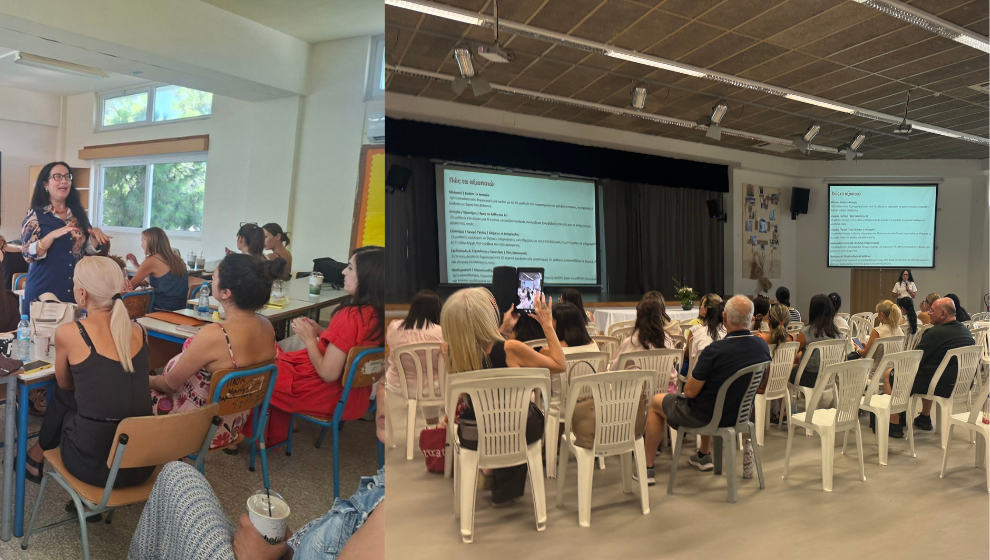
Professional Development Seminars for Teachers Held During the 2026 Teachers’ Two-Day Event
Seven professional development seminars for teachers were successfully delivered as part of the annual Teachers’ Two-Day Event, held from 8 to 10 September 2026 across...
Read more 03/08/26
Young People Shape the Future of Mental Health Support in Cyprus
Young people in Cyprus are helping drive meaningful change in how mental health is understood, prioritised, and supported nationwide. After 26 months of coordinated action,...
Read more 28/07/26
CARDET Launches Two New Policy Papers on Europe’s Digital Democracy and Future Skills
As Europe faces growing challenges in strengthening democratic participation while preparing its workforce for the green and digital transition, CARDET has published two new policy...
Read more