


Young People as Partners in Cyprus’ Mental Health Future

Young people as part of the solution
Across Europe, many young people say they feel overwhelmed by crises, stigma, and uncertainty – yet a significant share also say they want to actively support the well‑being of others. In other words, the same generation carrying a heavy mental health burden is also ready to be part of the solution.
In mental health, we often focus on professionals, clinics, and individual treatment plans. These are vital. But if young people are not part of deciding what support should look like, even the most sophisticated system can miss the mark. Under the UN Convention on the Rights of the Child, children and young people have the right to be heard in all matters affecting them – and mental health policy clearly falls within that scope.
A new direction for Cyprus
Through the EU‑funded project “Supporting Mental Health and Care for the Well‑Being of Vulnerable Children and Youth,” implemented by UNICEF and CARDET Center Center with the support European Commission, Cyprus has taken an important step in changing how decisions on youth mental health are made. Youth participation was built into the heart of the reform: it was not an “add‑on”, it was part of how the system was governed.
The Cyprus Youth Council sat as a full member of the Project Steering Committee alongside the Ministry of Health, the Youth Board of Cyprus, and European Commission and UNICEF. Young people were also formally included in the National Mental Health Strategy Working Groups, where they discussed evidence, debated recommendations, and helped shape the final strategy. They did not just “validate” conclusions; they influenced them.
From consultation to co‑governance
Too often, youth participation is limited to a survey or a one‑off focus group. These tools are useful, but they are not enough. Meaningful participation begins when young people sit at the same tables where decisions are taken and have clear roles, responsibilities, and follow‑up.
In the Cyprus reform, youth representatives came prepared with consultation results, policy proposals, and lived experiences gathered from diverse youth communities, including those facing socio‑economic challenges or exclusion. They helped identify gaps in services, contributed to research and outreach, and took part in governance meetings that oversee implementation. Participation became a collective process, not a token invitation to one or two “youth voices”.
Learning from European practice
Low‑threshold youth mental health services across Europe already show what it looks like when young people are trusted as partners, not just patients. Models such as @ease in the Netherlands, Jigsaw in Ireland, Peaasi in Estonia, and soulspace in Germany offer walk‑in, youth‑friendly spaces where peer supporters and young volunteers play a central role in early support. These hubs prove that when services are co‑designed with young people, more of their peers feel safe enough to seek help early.
Despite their differences, these initiatives share a core principle: young people are involved in how services are designed, communicated, and delivered. They serve on advisory groups, help shape opening hours and communication, and act as bridges between professional systems and their communities. Cyprus can draw inspiration from these models as it strengthens its own low‑threshold, youth‑friendly services and peer support networks.
A call to action for Cyprus
Cyprus is already on the map of countries that treat youth participation in mental health as a serious governance tool, not just a public relations exercise. The new Youth Engagement Framework and #ΜίλαΑνοιχτά #ΕίναιΟΚoτιΝιώθεις youth‑led awareness campaign co-designed with young people show what is possible when political will meets structured mechanisms.
The next step is to deepen and widen this approach: into schools, youth centers, digital spaces, local services, prevention programmes, and community‑based supports where peer supporters stand side by side with professionals. For public institutions, this means opening decision‑making spaces and resourcing youth structures to participate meaningfully. For professionals and civil society, it means recognising young people as partners with expertise rooted in lived experience.
And for young people themselves, it is an invitation: your voice is needed not only to describe the problems you face, but to design the solutions that will carry Cyprus into a more inclusive, mentally healthy future. If we want mental health strategies that work, we must co‑create them – not for young people, but with them.
Diamando Zisimopoulou,
Project and Policy Officer, Cyprus Youth Council
Contributions: Anahit Minassian, Youth Mental Health Technical Support Coordinator at UNICEF Europe and Central Asia
About the Project
The project Supporting Mental Health Resilience among Youth in Cyprus is funded by the European Commission via the Technical Support Instrument (TSI) and implemented by UNICEF in collaboration with the Ministry of Health of Cyprus. CARDET coordinates the research component with the support of the Youth Board of Cyprus (ONEK) and the Cyprus Youth Council (CYC). Project Reference: ECARO/PCA202294/SPD2024252

LATEST NEWS
 11/09/26
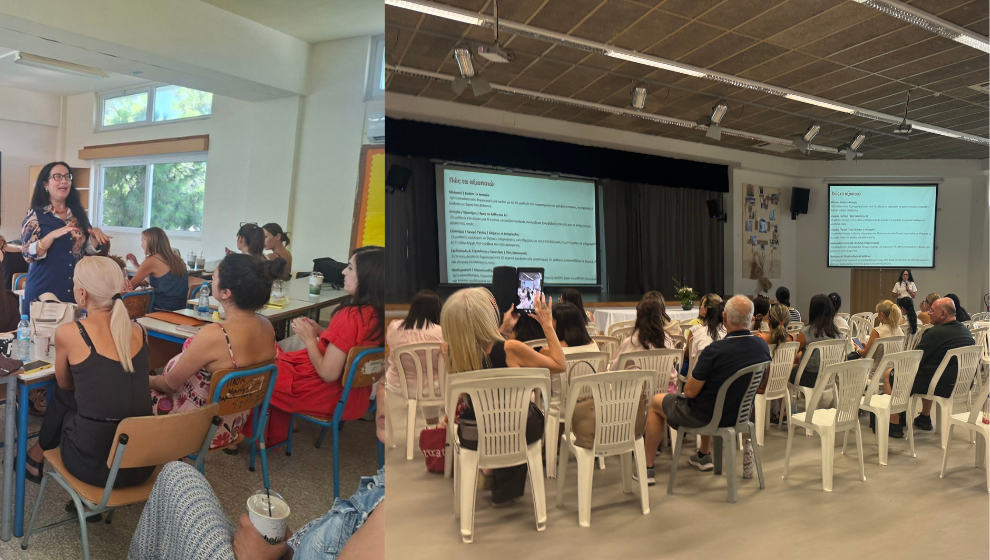
Professional Development Seminars for Teachers Held During the 2026 Teachers’ Two-Day Event
Seven professional development seminars for teachers were successfully delivered as part of the annual Teachers’ Two-Day Event, held from 8 to 10 September 2026 across...
Read more 03/08/26
Young People Shape the Future of Mental Health Support in Cyprus
Young people in Cyprus are helping drive meaningful change in how mental health is understood, prioritised, and supported nationwide. After 26 months of coordinated action,...
Read more 28/07/26
CARDET Launches Two New Policy Papers on Europe’s Digital Democracy and Future Skills
As Europe faces growing challenges in strengthening democratic participation while preparing its workforce for the green and digital transition, CARDET has published two new policy...
Read more