


Democracy Needs More Than Good Intentions: Why the Next Human Rights and Democracy Action Plan Must Put Civil Society First

Right now, the European Union is renewing its Human Rights and Democracy Action Plan: the five-year blueprint that guides how the EU promotes human rights and democracy worldwide. The timing could not be more important. The attacks on civil society are not random or isolated: they follow similar patterns across regions and are part of a broader, coordinated effort to weaken democracy and human rights worldwide. This is a genuine opportunity to step up. But only if the EU uses it well.
The question is not whether civil society will be mentioned in the new plan. It almost certainly will be. The question is whether civil society will be enabled, protected, resourced, and genuinely engaged through a proper framework that supports the Action Plan’s implementation, or whether it will be squeezed out of the actual work.
A foundation worth building on
The current Human Rights and Democracy Action Plan does a number of things right. It recognises independent civil society as essential to democratic resilience. It commits to protecting a safe and enabling environment for civil society organisations. It calls out restrictive legislation, including limits on foreign funding. It positions CSOs not only as partners in implementation but as watchdogs in governance, media freedom, digital rights, and multilateral spaces.
This is a solid foundation. Civil society and civic space are woven across all five pillars of the current plan, not treated as a side issue. That mainstreaming matters, and it should be preserved in the next cycle. But a foundation is not enough if the walls are crumbling around it.
The gap between words and practice
Here is the uncomfortable truth: the EU’s stated commitment to civil society is not matched by what actually happens with its money and its programmes.
A recent CONCORD study, Who Still Holds the Lion’s Share?, analysed over €26 billion in EU external action funding. The findings are striking. Only 10% of the budget reviewed is explicitly earmarked for civil society organisations. For 70% of the funding, there is simply no publicly available information to even assess whether any of it reaches civil society at all. Indirect management – where the EU delegates implementation to large pillar-assessed organisations such as UN agencies or development banks – now accounts for 62% of the budget, and CSOs are structurally excluded from this modality under EU financial rules.
The picture does not improve when you look at the EU’s flagship infrastructure investment initiative, the Global Gateway. On paper, democratic values and high standards are among the core principles guiding Global Gateway investments through the 360° approach. In practice, it is difficult to ascertain the degree to which the principles are integrated in projects and with what impact. According to recent research by CONCORD, despite the stated importance of the 360° approach, its components do not yet constitute systematic features of investment-led cooperation, nor are they properly followed up and reported to the public. Additionally, the Global Gateway Civil Society and Local Authorities Advisory Platform has a mandate to “hold the EU to account for respecting and fulfilling EU values”, yet with no real influence over strategy, no say in project selection, and no mechanism to hold anyone accountable for the recommendations it makes, it is difficult to categorise it as anything more than another box-ticking exercise.
Meanwhile, the European Commission’s proposal for the next Multiannual Financial Framework would discontinue the dedicated Civil Society Organisations and Human Rights and Democracy Thematic Programmes: the very funding streams that currently provide the most accessible and predictable resources for civil society work. Removing them without a credible replacement would not simplify things. It would fragment support and weaken the partnerships that have been built over years.
Taken together, these trends point in a troubling direction: civil society is being slowly moved from the role of independent actor to that of occasional consultant. Present at the launch event. Absent from the decisions.
What the new Action Plan should set in motion
The Human Rights and Democracy Action Plan is not a funding instrument. But it is not without weight: endorsed by Member States, it defines what the EU publicly commits to on human rights and democracy, and holds institutions accountable for following through. That is precisely why the next plan needs to go further on civil society, not pull back. This matters all the more because CSOs are in fact a key channel for implementing the Action Plan itself: the majority of funding that does reach civil society flows through governance, human rights, and democracy programmes – exactly the areas the AP prioritises. Three things matter most:
- First, name the threats honestly, including the ones closer to home. The new Action Plan should explicitly acknowledge that civic space is shrinking inside the European Union too, and that this has consequences beyond Europe’s borders. When EU Member States restrict foreign funding for NGOs, criminalise protest, or treat civil society as a political opponent, it undermines the EU’s credibility when it raises the same issues with partner countries. But this is not just a matter of political coherence. The EU has a legal obligation, under Article 11(2) of the Treaty on European Union, to engage with civil society both internally and externally. Protecting civil society actors inside the EU also directly legitimises their role in partner countries: when the EU tolerates restrictions at home, it weakens its own argument abroad.
- Second, make the funding real. Political commitments without resources are just words. The new Global Europe Instrument should call on the EU to push for ring-fenced allocations, at least 15% of programmable external funding implemented by civil society organisations. It should also push back on the tendency to replace grants with financial instruments and blended finance in contexts where these tools simply do not work: fragile states, closed civic space environments, and organisations working with marginalised communities. For many of the most important human rights and democracy programmes, grant-based, flexible, multi-year funding is not a preference. It is a necessity. Equally, the instrument should explicitly recognise advocacy and network-building as legitimate activities for civil society under EU funding – not risks to be managed, but core contributions to democracy that the AP itself depends on.
- Third, make engagement meaningful, not ceremonial. The European Union should ensure that EU delegations have the mandate, the capacity, and the resources to work with local civil society, including organisations led by and representing women, people with disabilities, LGBTIQ+ communities, and other marginalised groups. In this regard, the ongoing restructuring of EU Delegations is a real and immediate risk: if it reduces the presence and capacity of CSO and human rights focal points on the ground, it will make meaningful engagement harder in exactly the places where it matters most. To make this engagement real, the EU should support a strong programming process that involves civil society throughout the project cycle and in human rights dialogue – not only at the start of a programme, and not only with the same well-connected organisations in capital cities – ensuring the plan is actually implemented through and with the people it is meant to empower.
The opportunity ahead: building on a strong foundation
The EU has built something worth defending in its Human Rights and Democracy Action Plan. The recognition that civil society is not just a service provider but a democratic actor in its own right, that civic space matters, that human rights defenders need protection, and that independent CSOs are essential to resilient societies, is the right framework.
But frameworks only hold if the EU is willing to back them up.
The renewal of the Action Plan is a moment to do exactly that. To close the gap between the EU’s stated values and its actual practices. To move civil society from the footnotes of policy documents to the centre of implementation. And to acknowledge that you cannot credibly champion democracy abroad while sidelining the people who build it.
This piece draws on CONCORD’s advocacy work on the EU Civil Society Strategy (September 2025), the MFF Analysis (December 2025), Who Still Holds the Lion’s Share? (March 2026), and Unlocking the Potential of the EU’s Global Gateway: Meaningful Engagement with Civil Society (March 2026).
The project “Towards an open, fair and sustainable Europe in the world – EU Presidency Project 2024-2026” is co-funded by the European Union and implemented by Global Focus, Grupa Zagranica, CARDET, and CONCORD, the European Confederation of NGOs working on sustainable development and international cooperation. Project Number: 2024 / 459-484. The contents of this publication are the sole responsibility of CARDET and do not necessarily reflect the views of the European Union.
Acknowledgment Article Contributions: Salomé Guibreteau and Jaimie Just
Camilla Falsetti,
Communications and Media Adviser, CONCORD
The article was published at the PolicyPress.

LATEST NEWS
 11/09/26
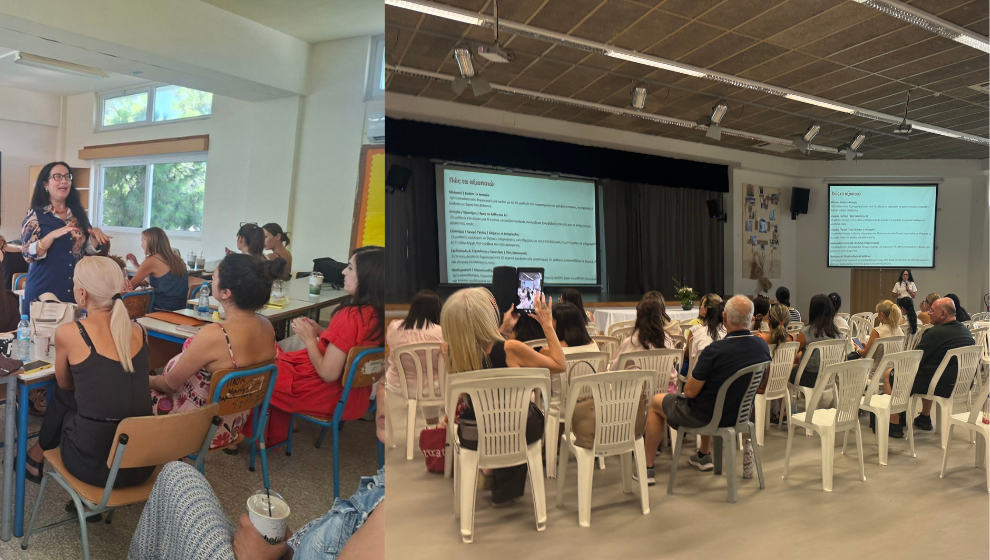
Professional Development Seminars for Teachers Held During the 2026 Teachers’ Two-Day Event
Seven professional development seminars for teachers were successfully delivered as part of the annual Teachers’ Two-Day Event, held from 8 to 10 September 2026 across...
Read more 03/08/26
Young People Shape the Future of Mental Health Support in Cyprus
Young people in Cyprus are helping drive meaningful change in how mental health is understood, prioritised, and supported nationwide. After 26 months of coordinated action,...
Read more 28/07/26
CARDET Launches Two New Policy Papers on Europe’s Digital Democracy and Future Skills
As Europe faces growing challenges in strengthening democratic participation while preparing its workforce for the green and digital transition, CARDET has published two new policy...
Read more